An itinerary for 3 days in London
Planning how to spend three days in London can feel overwhelming. It’s a big city full of different attractions and experiences, and it can be hard to know which ones to prioritise, and how to fit them all into a short trip.
Having lived in London for nearly 30 years, I’ve designed a 3-day itinerary to help you with this, so that you can make the most of your time in the capital. It covers the main bucket-list experiences in the city, along with practical tips on getting around, suggested timings for each attraction, and advice on whether the London Pass is worth buying.
This post contains affiliate links
Is 3 days in London enough?
Given the size of London, you might be wondering if three days is enough to experience its many of highlights and attractions, especially if it’s your first visit.
The answer is yes. While there is more than enough to keep you occupied for a much longer trip, three days is enough to experience many of London’s must-see sights.
If you plan your days carefully, it’s possible to visit iconic sights such as Buckingham Palace, Westminster Abbey, Big Ben, the Tower of London, and St. Paul’s Cathedral. You can also stroll through a Royal Park, visit one of the city’s many world-class museums, and sail along the River Thames or ride on the London Eye.
The key is planning. While getting around is relatively easy, travelling between attractions still takes time. So it’s important to organise your sightseeing so that you visit attractions that are close together in order to avoid backtracking.
This 3-day London itinerary is built with this in mind. The first two days focus on Westminster, the West End and the City of London, while Day 3 offers flexible options based on your interests – be that visiting museums, exploring more parks and palaces, doing a bit of shopping, or discovering top foodie spots.
Your 3 Day London itinerary at a glance
Day 1
– Buckingham Palace
– St. James’ Park
– Westminster Abbey
– Big Ben & the Houses of Parliament
– Trafalgar Square
– Covent Garden, Leicester Square & Theatreland
Day 2
– St. Paul’s Cathedral
– The Tower of London
– River Thames cruise to Westminster
– The London Eye
– Dinner & London views
Day 3
Mix and match between:
– Museums & culture
– More Royal palaces & parks
– London for foodies
– London shopping
London 3 day itinerary in detail: day 1
Day 1
– 9.30 am to 10.15 am: Visit Buckingham Palace
– 10.15 am to 10.45 am: Wander through St. James’ Park
– 11.00 am to 12.30 pm: Go inside Westminster Abbey
– 12.30 pm to 1.00 pm: Take some photos of Big Ben & the Houses of Parliament
– 1.00 pm to 2.30 pm: Lunch
– 2.30 pm to 3.15 pm: Walk to Covent Garden via Whitehall & Trafalgar Square
– 3.15 pm onwards: Explore Covent Garden, Leicester Square & Theatreland
9.30 am: Visit Buckingham Palace
Suggested duration: 30-45 minutes (or 2-3 hours if touring the palace or watching the Changing of the Guard ceremony)
The home of the British Royal Family, Buckingham Palace is one of London’s most recognisable landmarks and a must-see for first-time visitors. It sits at the end of The Mall, not far from Victoria Station.
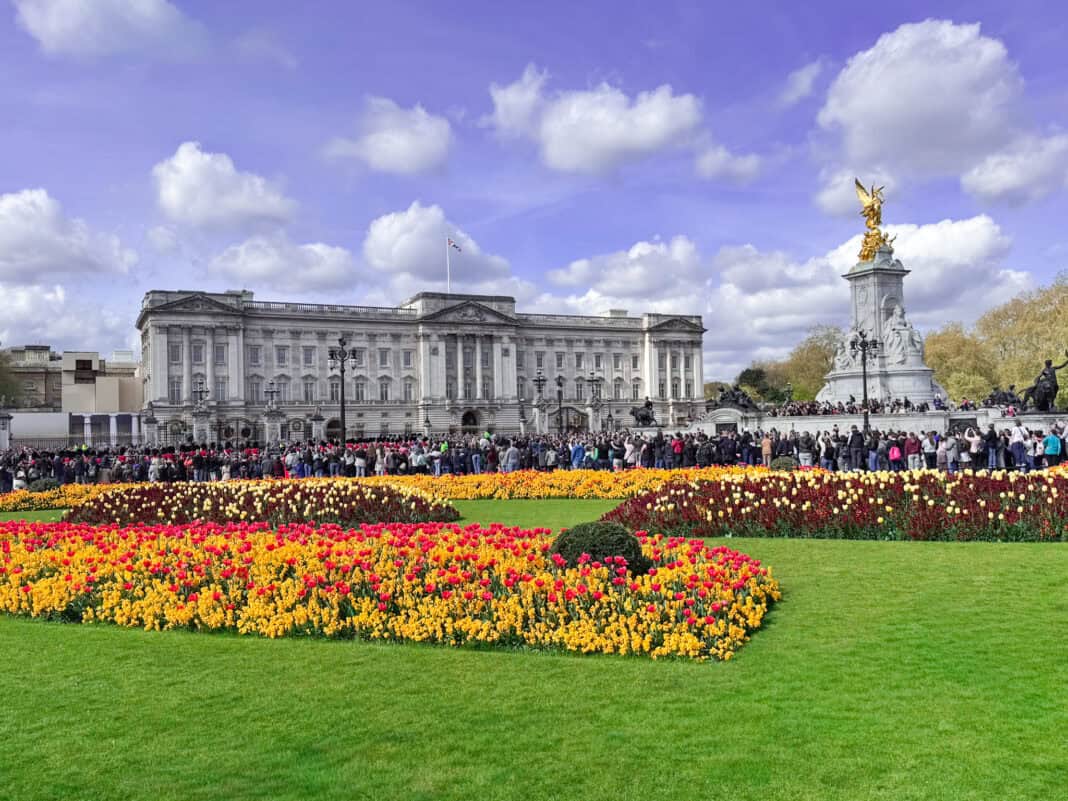
If you’re only visiting to take a look and snap some pictures, you won’t need long here.
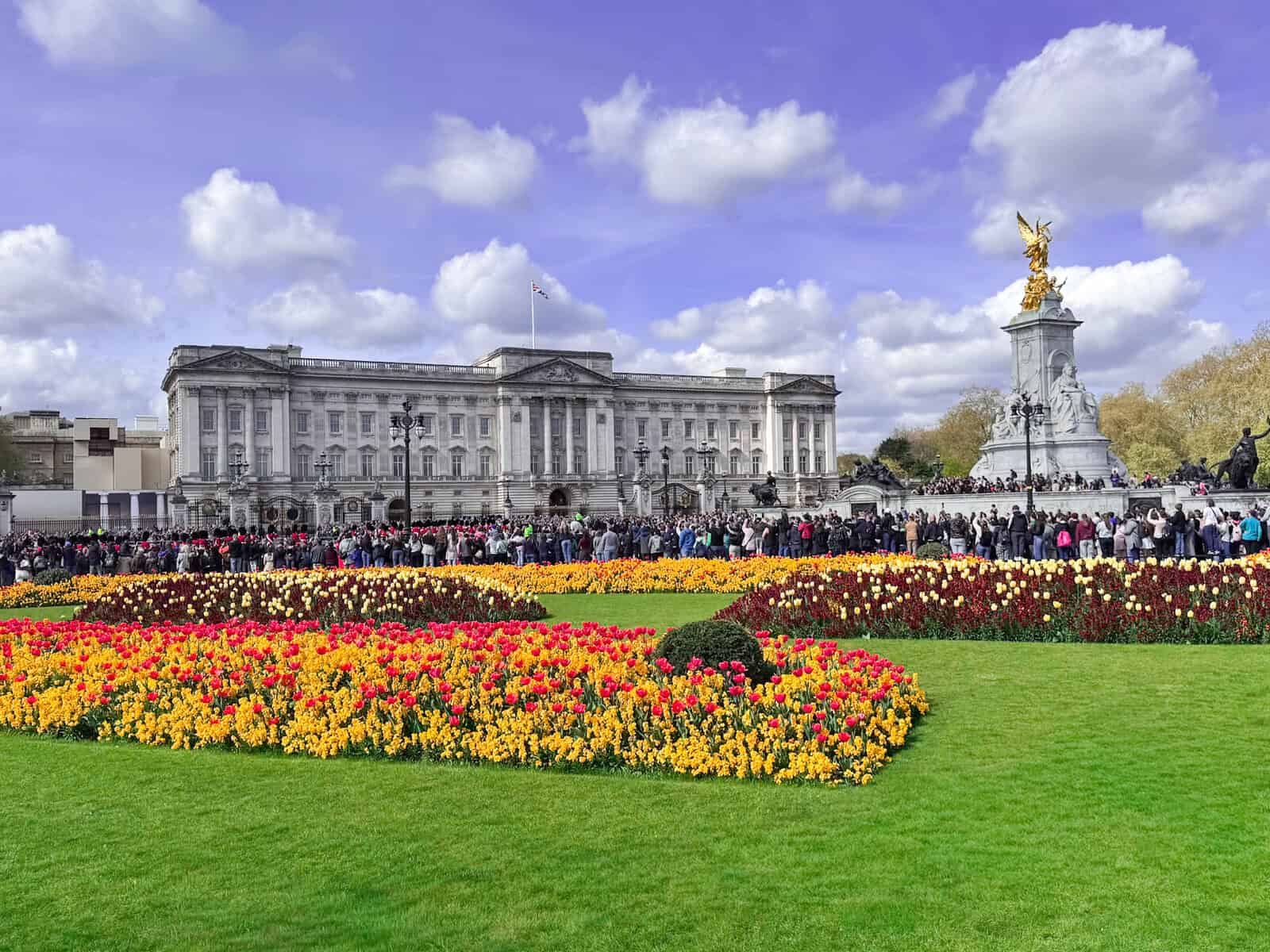
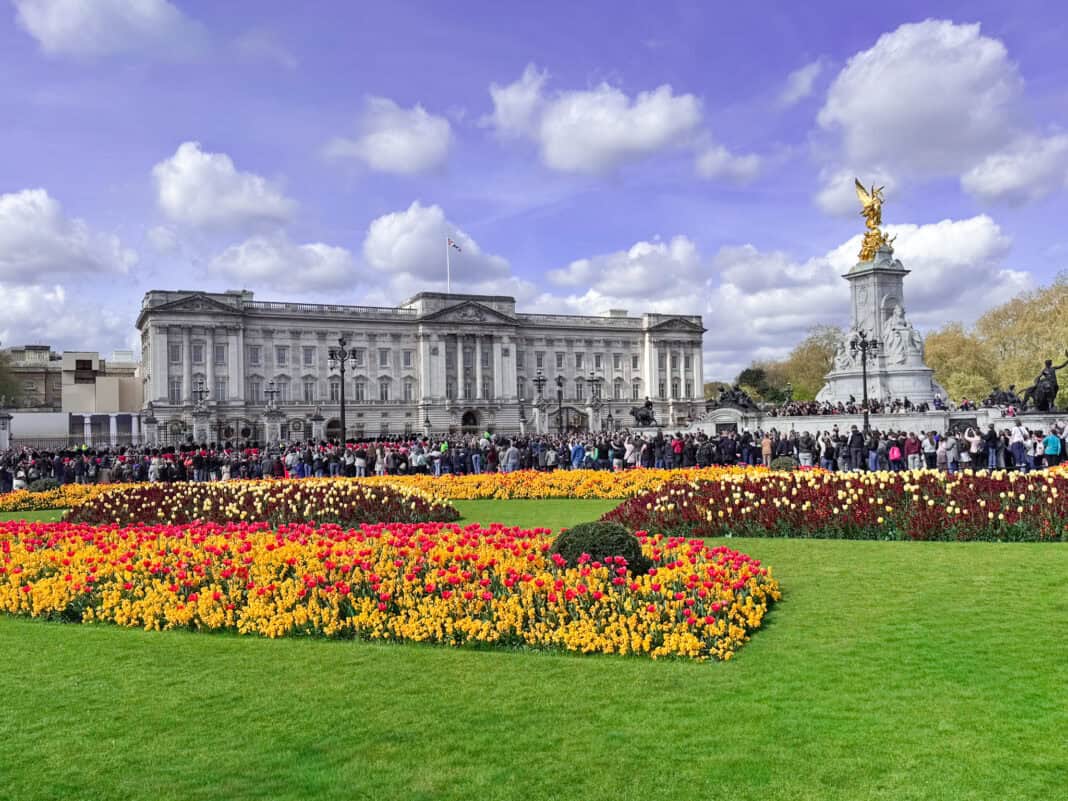
One of my favourite spots for this is the pathway beside the Memorial Gardens overlooking St James’s Park. It gives you a lovely view of the Palace framed by the flower beds, and it’s where I took the photo above.
Watch the Changing of the Guard ceremony
This famous ceremony is quite a spectacle to watch.
It signifies the changeover of the King’s Guard at Buckingham Palace to the new guards, and takes place around St James’s Palace, Buckingham Palace, and the Wellington Barracks on selected days (usually Mondays, Wednesdays and Fridays) at 11 am. The ceremony lasts for around 30 minutes.

If you stay for the Changing of the Guard ceremony, arrive around 10.15 am to secure a spot as near to the front of the crowd as possible.
Tour Buckingham Palace
During the summer (early July to late September), you can go inside and explore some of the Palace’s grand rooms. You’ll get to see the State Rooms, the Ballroom, the Grand Staircase, and the Palace Garden, among other things.
Note that if you plan to stay longer around the Palace and watch the Changing of the Guard ceremony or go inside, you will need to adjust the later timings in this itinerary.
Getting to Buckingham Palace: Green Park station (served by the Piccadilly, Victoria, and Jubilee lines), St. James’ Park station (District and Circle lines), and Victoria station (the Victoria, District, and Circle lines) are all around a 10-minute walk from the Palace.
10.15 am St. James’ Park
Suggested duration: 30 minutes
St James’ Park is the oldest of the eight Royal Parks in London and, in my opinion, one of the most attractive ones. It’s a beautiful park, with a large lake and a fountain. It’s also conveniently situated between Buckingham Palace and the Westminster area of the city, making it an ideal place to visit en route to other sights.

After seeing Buckingham Palace, enter the park behind the Memorial Gardens and walk along the lakeside. You’ll see a lot of wildlife here, including pelicans, ducks, and swans. There are also places to grab a quick drink and decent public toilets.
11.00 am: Visit Westminster Abbey
Suggested duration: 90 minutes
A short walk from St. James’ Park is Westminster Abbey (exit the park at the entrance near Storey’s Gate).
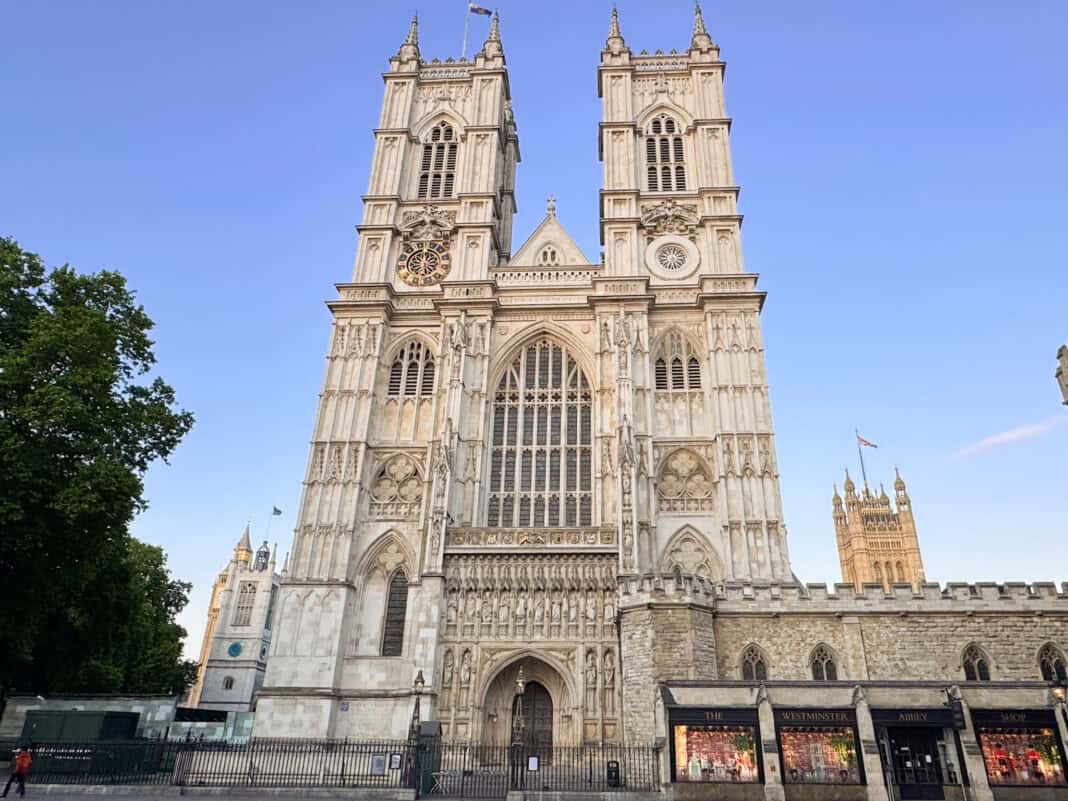
If you have time, I’d recommend going inside this magnificent 11th-century Gothic building, which has hosted royal coronations, weddings, and state occasions for centuries. Highlights include the stunning Lady Chapel, the cloisters, and the Chapter House.
Entry is included with The London Pass, or you can book tickets separately.
Getting to Westminster Abbey: St. James’ Park is a 5-minute walk to the Abbey. The nearest tube stations are St. James’ Park and Westminster – both around a 5- to 10-minute walk away. If you can, walk from Buckingham Palace via St. James’ Park: the amount of walking will be the same as getting to and from tube stations, and in my opinion it is one of the nicest walks in this area.
12.30 pm: Big Ben and the Houses of Parliament
Suggested duration: 20 to 30 minutes
Just a short walk from Westminster Abbey is Big Ben – one of the world’s most photographed landmarks – and the Houses of Parliament, home to the British government. Both sit beside the River Thames.
You don’t need to spend much time here – but you will no doubt want to take some pictures. I recommend walking a little way on to Westminster Bridge, or across the road, for some of the best views of Big Ben.

And if you have time, you can book guided tours to explore the historic chambers in the Houses of Parliament where laws are made.
Getting to Big Ben and the Houses of Parliament: Walk from Westminster Abbey, past Parliament Square, and towards Westminster Bridge. Westminster tube station is opposite Big Ben.
1.00 pm: Lunch
At this point in the day, you’ll no doubt be ready for lunch. There are plenty of options within a short walk of Westminster Abbey and Parliament Square, including traditional London pubs serving classic British dishes and cosy cafes, sandwich shops, and modern eateries serving international food.
Victoria Street, which is just a short walk beyond Westminster Abbey towards Victoria Station, also has an array of different cafes and restaurants to choose from.
To keep your sightseeing on schedule, I’d recommend choosing somewhere in this area, rather than travelling elsewhere for lunch.
2.30 pm onwards: Head to Covent Garden and explore the area
Suggested duration: 2-3 hours, including walking (plus more for dinner and a show if you’re staying for the evening)
After lunch, head to Covent Garden, one of London’s liveliest neighbourhoods in the West End of the city. Historically a fruit, veg, and flower market, it’s now a vibrant, trendy covered market with small boutique and artisan shops, bars, and restaurants. It’s a great place to wander around and take in the vibe.
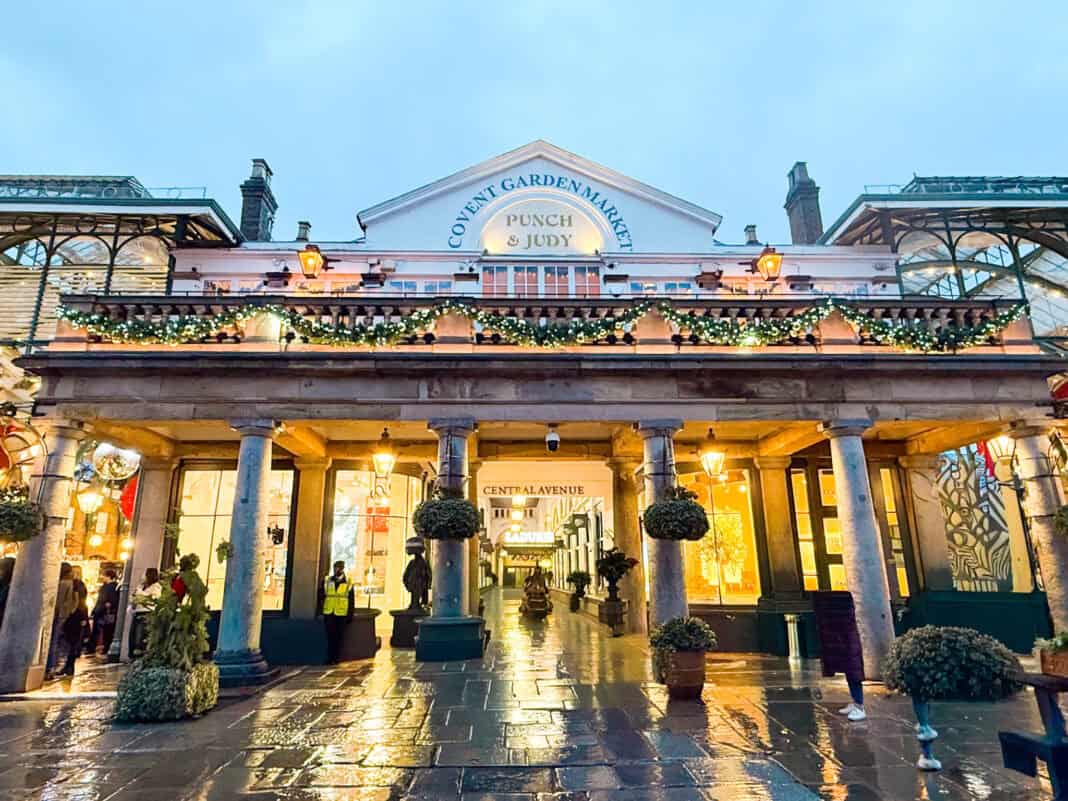
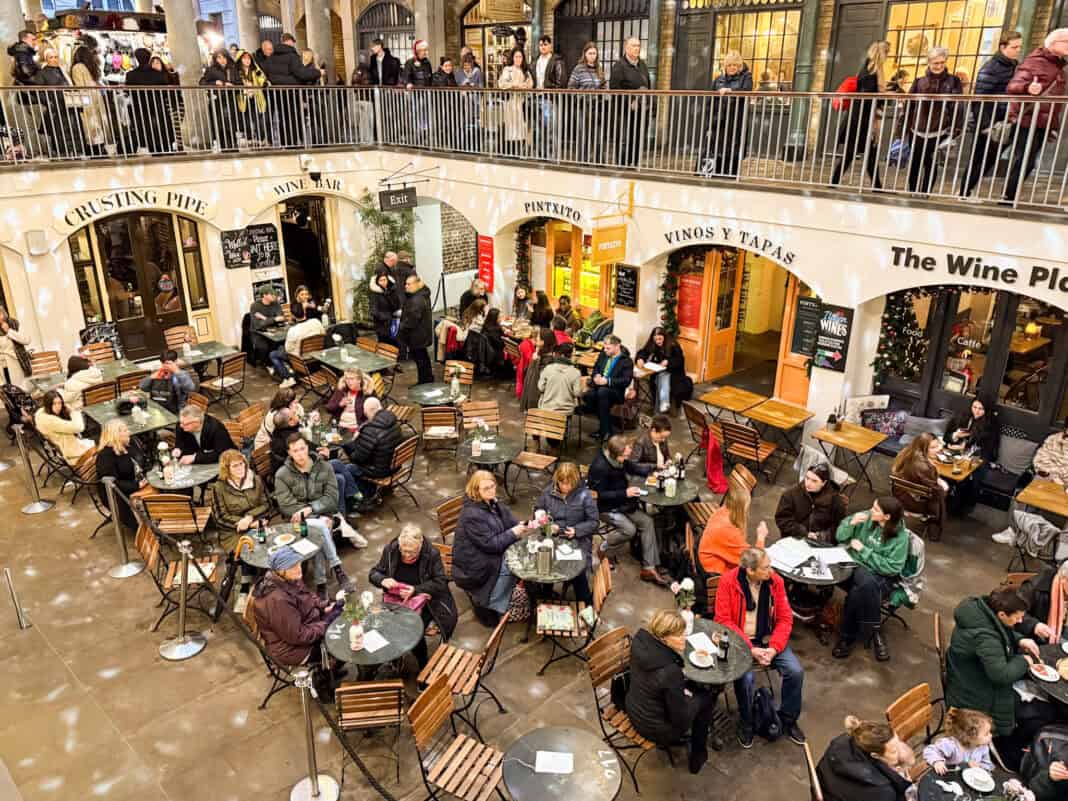
Next to the market area is an open piazza, where you’ll see crowds of people watching the street performers who come here. The Royal Opera House is also nearby, as is the London Transport Museum.
Arriving in the mid to late afternoon gives you plenty of time to stroll around and explore before the evening. It’s an ideal place to stop for a drink or dinner, and with Leicester Square, Soho, Chinatown, and London’s famous theatre district all within a short walk, it’s the perfect place to round off your first day.
If you’re planning to see a West End show, I’d recommend booking tickets in advance.
Getting to Covent Garden: Although Covent Garden station is just two minutes from the market, I’d recommend walking from Westminster if you can. It’s a pleasant walk that takes you past several interesting sights, including Downing Street, Whitehall, Horse Guards Parade, and Trafalgar Square. You can then head into the West End up to Covent Garden.
The walk will take around 30 to 45 minutes, depending on how often you stop, and lets you see far more than if taking the tube.
Day 2 of your 3 days in London itinerary
Day 2
– 9.30 am to 11.00 am: Visit St. Paul’s Cathedral
– 11.30 am to 1.30 pm: Go inside the Tower of London
– 1.30 pm to 3.00 pm: Lunch
– 3.00 pm to 4.15 pm: River Thames cruise to Westminster
– 4.30 pm: Ride the London Eye
– 6.00 pm onwards: Relax on the South Bank or visit one of the city’s observation decks
9.30 am: St. Paul’s Cathedral
Suggested duration: 90 minutes
Start your second day in London at St. Paul’s Cathedral. This puts you in the heart of the City of London, one of the oldest areas, and within easy reach of the Tower of London, which is your second stop of the day.
Built in the late 17th century and early 18th century and designed by Sir Christopher Wren, the Cathedral is a beautiful building. It’s famous for its magnificent dome, which is among the highest in the world.

Having lived in London for many years, it took me a surprisingly long time to venture inside. When I finally did, I couldn’t believe I’d waited so long. It’s absolutely stunning, with ornate features, beautiful murals, and wonderful marble floors.
Highlights include the American Memorial Chapel with its stained-glass windows, the crypt containing the tombs of famous historical figures, such as Sir Christoper Wren and Lord Nelson, and the Dome Galleries. These include the Whispering Gallery, famous for its acoustics, and the Golden Gallery with fantastic views across London.
Book entrance tickets to the Cathedral here.
If you have The London Pass, entry is included as part of that.
If you want to learn about the history and architecture of the Cathedral, book a guided tour (free for ticket holders). These need to be booked on the day and are subject to availability.
Getting to St Paul’s Cathedral: St. Paul’s tube station is just a few minutes’ away and is served by the Central line. Other nearby stations include Mansion House (the District and Circle lines), Bank (the Northern line), and Blackfriars (the District and Circle lines). All are around a 10-minute walk away.
11.30 am: The Tower of London
Suggested duration: 2 hours
The Tower of London is one of the most famous tourist attractions in London, and an essential stop for first-time visitors.
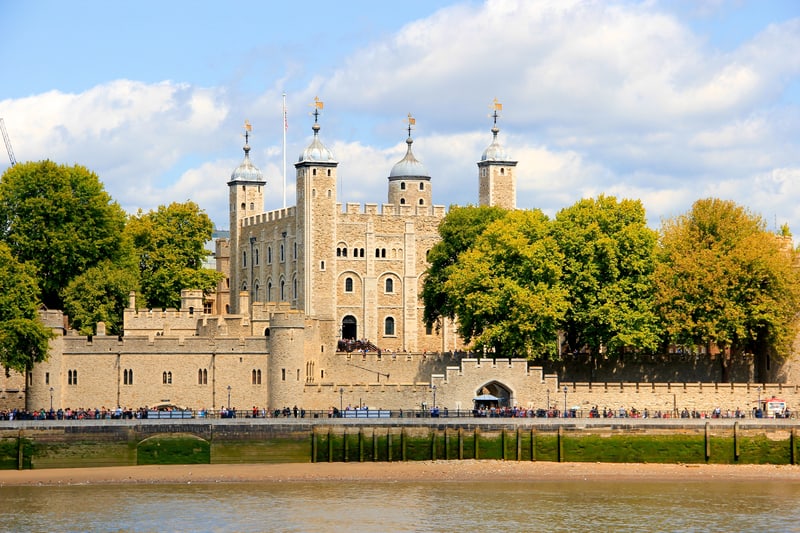
If you’re interested in history, you really should go inside. You can explore the fortress’s fascinating past, discover the stories of the famous prisoners once held here, admire the Crown Jewels, and step inside the White Tower. Also keep an eye out for the iconic Beefeaters, and don’t miss the views of the beautiful Tower Bridge from the medieval walls.
The Tower of London is extremely popular, so book tickets in advance, especially if you’re visiting during the school holidays.
Entry is also included with The London Pass.
For everything you need to know before visiting, read my guide to the Tower of London.
Getting to the Tower of London: Hop on the tube at Monument and go one stop to Tower Hill Station (District and Circle lines). The Tower is a five-minute walk away.
1.30 pm: Lunch
After exploring the Tower of London, stop for some lunch before continuing your sightseeing. If you want to maximise your time, there are several cafes inside the Tower of London, including the New Armouries Cafe which serves snacks and cakes, as well as hot meals.
For more choice or to enjoy lunch with a view, head outside towards Tower Bridge or along the Thames Path, where you’ll find a wide selection of pubs, cafés and restaurants overlooking the river.
3.00 pm: River cruise to Westminster
Suggested duration: 1 hour
After lunch, take a sightseeing cruise along the River Thames back to Westminster.
This is one of my favourite parts of the itinerary. After a busy morning exploring St Paul’s Cathedral and the Tower of London, it’s a chance to sit back and enjoy the views (and give your feet a well-earned break!).
You can pick up a City Cruises boat at the Tower Pier dock, just a few minutes’ walk from the Tower of London. If you have The London Pass, a 24-hour hop-on hop-off cruise is included; otherwise, you can purchase a separate ticket at the booths.
At the start, you’ll see the iconic Tower Bridge. Then as you sail along the Thames, you’ll pass some of London’s famous landmarks, including the HMS Belfast warship, The Shard, Shakespeare’s Globe Theatre, the Tate Modern, and the London Eye.
Along the way, a guide provides information on the sights, and shares interesting historical facts and stories.

The journey is around 30 to 40 minutes, but factor in at least 10 to 20 minutes extra for boarding and disembarking.
If you’re following my itinerary, stay on until the London Eye rather than getting off at Westminster. It saves you having to cross Westminster Bridge, which can get really crowded.
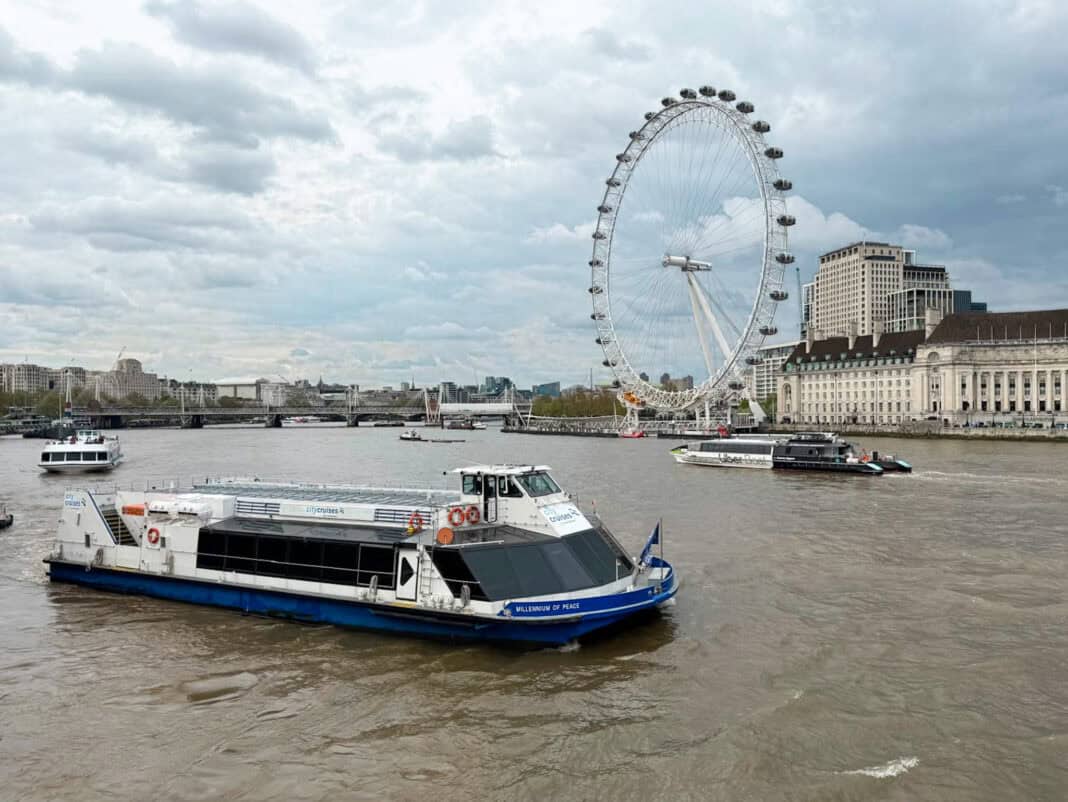
These cruises run regularly throughout the day, although timetables differ between summer and winter. Check the timings here.
4.30 pm: Ride the London Eye
Suggested duration: 1 hour to 1 hour 15 minutes (including boarding)
After getting off the boat, I’d then take a ride on the London Eye, one of the city’s most iconic landmarks. Standing 135 metres above the River Thames, the giant observation wheel offers some of the best panoramic views of the capital.
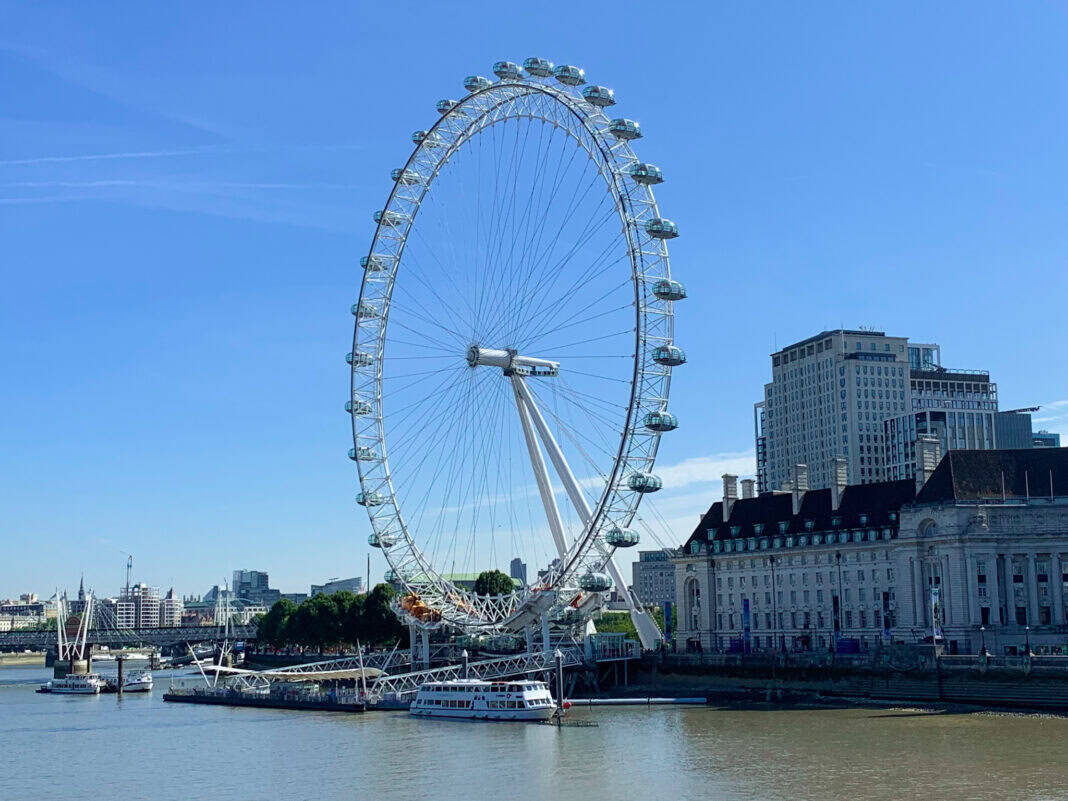
The slow 30-minute rotation gives you plenty of time to take in the landmarks and to get a bird’s-eye view of the River Thames as it winds through the heart of London.
Seeing the city from above is a completely unique experience and, after two days exploring London on foot, it’s the perfect way to appreciate just how much you’ve covered. On a clear day, you can see for up to 25 miles.
Although the ride itself lasts around 30 minutes, I’d allow at least an hour (maybe a bit more) in total to account for queuing and boarding. Standard entry is included with The London Pass (booking required), although you can also buy a Fast Track ticket if you’d like to reduce your waiting time.
Opening hours vary throughout the year, with the London Eye generally staying open later – until 8.30 pm – during the summer months. Depending on when you’re visiting, getting there later in the day gives you a good chance of seeing the sun set over the city and the start of London lighting up in the dark.
Getting to the London Eye: Get off the City Cruises boat at the London Eye stop. If you’re not arriving by boat, the nearest station is Waterloo or Westminster, the latter just across the bridge.
6.00 pm onwards: Evening options
How you spend your second evening really depends on what you’re looking for. Whether you want a relaxed riverside meal, fine dining with spectacular views, or a memorable sunset over London, these are three of my favourite options.
Relax on the South Bank
If you’re ready to slow the pace after a busy day of sightseeing, spend the evening on the South Bank. Just a short walk from the London Eye, you’ll find plenty of riverside pubs, restaurants, and bars, as well as the Southbank Centre and the Royal Festival Hall.
It’s a lovely area to wander around in the evening, especially with the Thames and London’s landmarks lit up in the dark.
Enjoy dinner with a view at The Shard

If you want a special experience with some high-end dining with a view, head to The Shard, London’s tallest building. You can visit the viewing platform for spectacular panoramic views or book a table at one of the restaurants or bars overlooking the city.
The nearest station is London Bridge, just two stops from Waterloo on the Jubilee Line.
Enjoy free views across London
If you’d like spectacular views of London without a price tag, I’d recommend the Sky Garden. Located on the 43rd floor of the ‘Walkie Talkie’ building, it’s London’s highest public garden where you can look out over the capital while wandering through a garden of plants from around the world.
Entry is free, although you’ll need to reserve a timed slot in advance (and the slots are popular, so plan as far in advance as you can). You can also stay for a drink or dinner if you’d like to make an evening of it.
I visited one evening and absolutely loved it here. Monument and Bank stations are close by.

Day 3 of your London itinerary: choose how to spend the day
By now, you’ll have seen many of London’s most famous landmarks. Day 3 is your chance to tailor your itinerary around your own interests, whether that’s world-class museums, more royal landmarks, shopping, or discovering London’s food scene.
I’d recommend choosing one of the options below or mixing and matching to create a final day that suits your travel style and the time you have available.
- Museums and culture
- Royal London and parks
- London for foodies
- Shopping in London
Museums and culture

London is home to some of the world’s best museums and galleries, many of which are free to visit. If you can, try to squeeze a visit to at least one or two into your trip.
If it’s your first time in the city, I’d recommend starting with the British Museum, where you can see treasures such as the Rosetta Stone and the Parthenon Sculptures.
Art lovers should head to the National Gallery, Tate Britain, or the Tate Modern, while anyone wanting to spend a full day exploring museums should make their way to South Kensington.
Here you’ll find three outstanding museums within a few minutes’ walk of each other: the Natural History Museum, the Science Museum, and the Victoria and Albert Museum.
The Royal Albert Hall is also nearby.
Many of London’s museums are free, although some ask you to book a timed entry slot in advance, so it’s worth checking their websites before you visit.
You can find a full list of London museums here and can filter by interest.
My recommendation: If you visit the Victoria and Albert Museum, don’t miss stopping for a drink in its café. It’s one of the most beautiful museum cafés I’ve visited anywhere.
Royal London and parks
If you’d like to experience London’s royal side beyond Buckingham Palace, spend your final day exploring Kensington Palace and the surrounding Royal Parks. Kensington Palace has been a royal residence for over 300 years and was famously the home of Diana, the Princess of Wales.
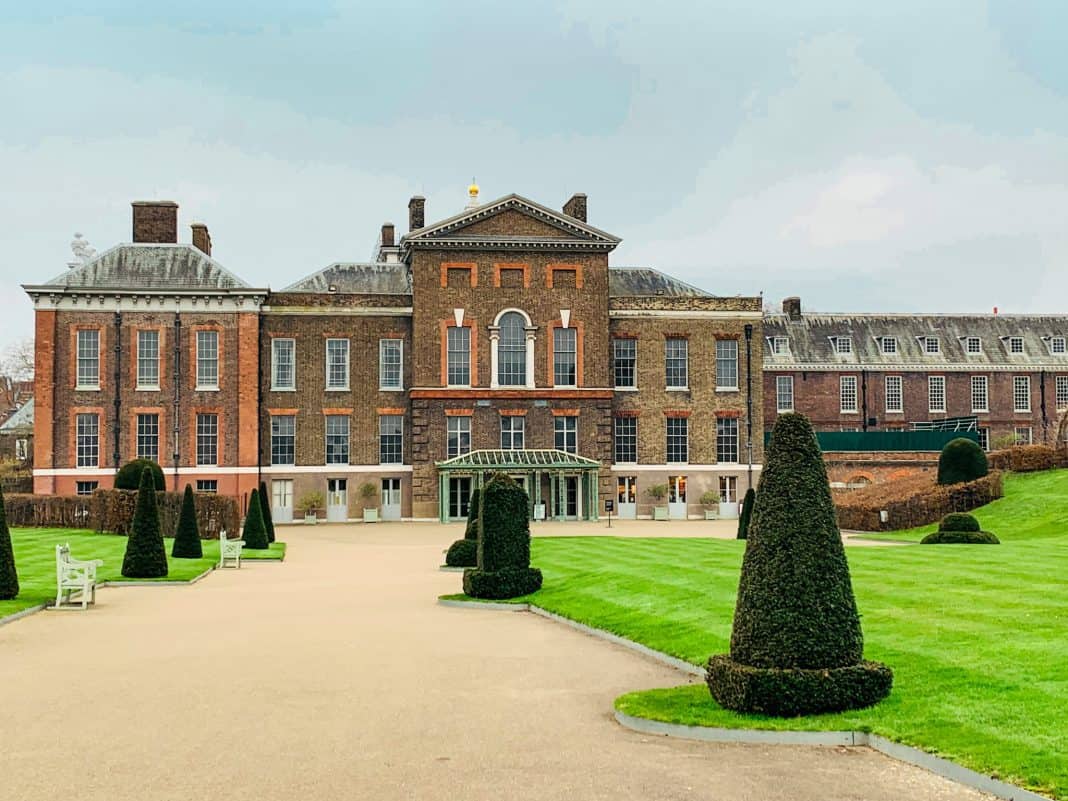
The Palace is around a 10- to 15-minute walk from Kensington High Street station (Circle and District lines). You can find everything you need to know in my separate article on Kensington Palace.
After your visit, wander through Kensington Gardens and neighbouring Hyde Park, two of London’s most beautiful Royal Parks. Stroll around the Serpentine, admire the gardens and memorials, visit the free Serpentine Galleries or even hire a rowing boat on the lake if the weather permits.
For more information, see my guide to London parks and gardens.
From Hyde Park, continue through Green Park towards Buckingham Palace, or stroll along Piccadilly back into the West End. If you’re looking to treat yourself, maybe round off your trip with afternoon tea at The Ritz.

London for foodies
London is a great place if you’re a foodie, so if you enjoy discovering local markets and trying different cuisines, you could spend your final day eating your way around the capital!
Borough Market
Start at Borough Market, one of London’s oldest and best-known food markets near London Bridge tube station. This vibrant market is home to over 100 stalls selling artisan cheeses, baked goods, fresh produce, international street food, and sweet treats. It’s the perfect place to browse, sample a few dishes, and enjoy an early lunch.
Soho
For lunch or dinner, head to Soho, one of London’s best neighbourhoods for dining, with an array of eateries to suit every budget and cuisine. Visit cafes, restaurants, bars, delis, bakeries, cake shops, and chocolateriers, or stop for a drink. Several tube stops will get you there, including Oxford Circus, Piccadilly Circus, and Tottenham Court Road.
Old Spitalfields Market and Brick Lane
East London also has Old Spitalfields Market (5 minutes from Liverpool Street Station). This is another historic covered market with an excellent mix of independent food vendors, artisan shops, and street food stalls serving cuisines from around the world. Just a few minutes away, Brick Lane is famous for its Bangladeshi curry houses and bagel shops.
Afternoon tea
Finally, if an English afternoon tea is something you’re after, there are plenty of places where you can get one. Famous places include the Ritz Hotel and the Fortnum and Mason department store.
My recommendation: If you’re mixing and matching these day 3 options and only have time for one food destination, I’d choose Borough Market. It has an enormous variety of food to sample, it doesn’t attract the costs of a high-end afternoon tea, and its location means it’s easy to combine with visits to other attractions.
London shopping
If the London shopping scene is on your list, you could spend at least some of your final day exploring some of the capital’s best-known retail districts.
Start on Oxford Street, home to hundreds of shops, including the flagship Selfridges department store. From there, you can wander in and out of the shops on Regent Street, also known for its elegant architecture, including the famous Liberty store with its distinctive Tudor-style building.
If you prefer independent shops, continue to nearby Carnaby Street or Covent Garden. Both areas are packed with boutiques, designer stores, and cafés, making them ideal for an afternoon of shopping and people-watching.
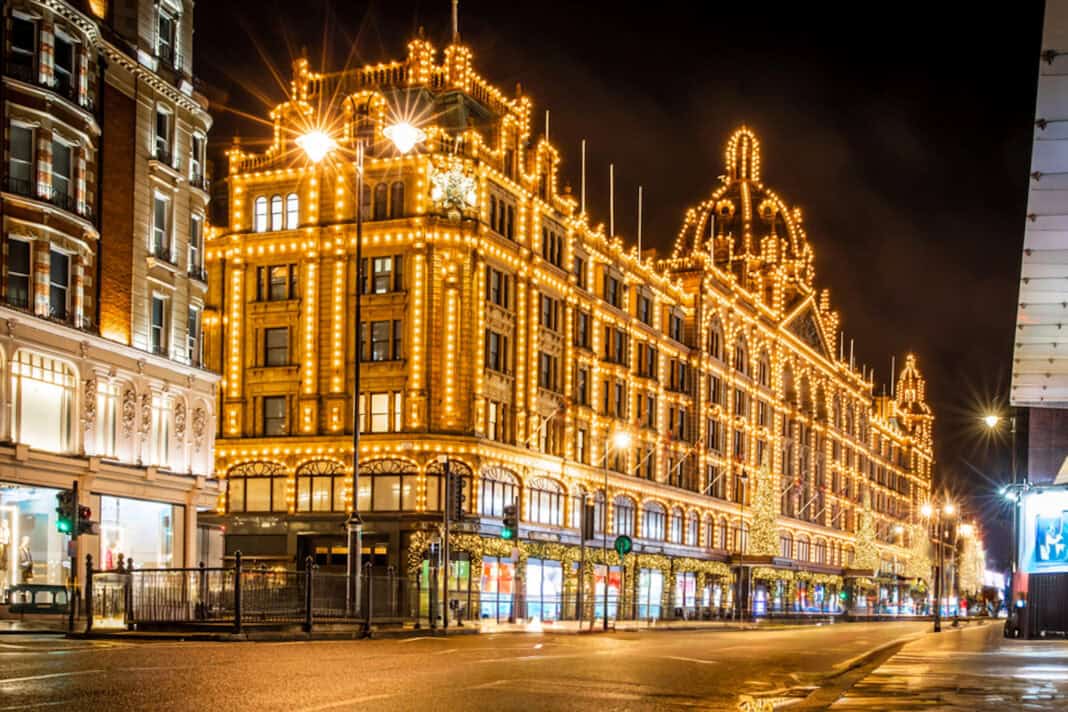
To visit more iconic stores, there’s Fortnum & Mason along Piccadilly, as well as Harrods (beautiful when lit up at night) and Harvey Nichols in Knightsbridge.
Is The London Pass worth it?
I’ve mentioned The London Pass throughout this itinerary. That’s because it covers many of the attractions I’ve recommended and could save you money if you plan to visit quite a few of them.
The London must-see attractions included in this itinerary that The Pass covers include:
– The Tower of London
– Westminster Abbey
– St Paul’s Cathedral
– The London Eye
– The Shard viewing platform
– A River Thames sightseeing cruise
– Kensington Palace (if you choose the Royal London option on Day 3)
– A hop-on hop-off bus if you perfer to travel this way
Plus dozens of other attractions across the city and beyond (over 100 in fact!)
The London Pass is available for different durations, including for 3 days, which would make it perfect for this trip. And while on face value it seems to be quite a high upfront cost, when you compare it to the cost of individual tickets, it’s excellent value for money.
As an example, if you were to visit the Tower of London, go inside Westminster Abbey, St. Paul’s Cathedral, and Kensington Palace, ride on the London Eye, go up The Shard, cruise down the River Thames, and make use of the hop-on hop-off bus, the cost of paying for these separately would be over £80 more than the Pass.
However, if you’re planning to visit only one or two paid attractions, buying individual tickets will often work out cheaper.
You can compare the different London Pass options and current prices here.
How to get around London
Despite its size, London is a really easy place to get around. Many of the main attractions are close together and so walking between them is possible. Plus, you’re bound to see a few more sights or discover hidden streets or historic pubs en route.
However, not everyone will choose to walk around London. If you’re one of them, you’ll find that the city has a vast network of public transport you can draw on – trains, buses, and the London Underground (‘the tube’) – and in the central parts, you’re never far away from a station or stop.
The quickest of these is the tube. This connects most of the major attractions, and the trains generally run every few minutes at peak times. If you’re sightseeing in the central part of the city, paying as you go is often cheaper than buying a Travelcard as there is a cap on the daily maximum spend.
Things to do if you have more than 3 days in London
If you have more than 3 days in London, there are some great places beyond the central area that you can visit, as well as a bit further afield. These include the chance to visit more Royal palaces and houses (e.g. Windsor Castle), historic towns and villages, and coastal destinations where you can get some sea air.
To discover some of the available options, check out my post on 21 top days out from London; many of these can be reached by train.
London short breaks: Frequently Asked Questions (FAQs)
London is a place to visit at any time of the year. However, the best time to visit really depends on the type of trip you’re looking for.
If you visit during Spring (March to May) or early autumn (September and October), you’re likely to experience mild and pleasant weather and smaller crowds than during the summer months. It’s a great time for getting outdoors – exploring London’s parks and gardens, wandering along the River Thames, and enjoying a sightseeing cruise.
Summer (June to August) can be very warm, with the bonus of longer daylight hours, which I always find is useful when you want to fit a lot of sightseeing into a short period of time. However, it coincides with school holidays, making it a busy and expensive time to visit. Booking in advance for the popular sights is a must at this time of year.
Winter (November to February) is colder, with shorter days and a greater chance of rain, but is still a great time for a short city break. Temperatures rarely fall below freezing, so you can comfortably explore the city if you wrap up warm. And being such a large city, there are plenty of indoor attractions to enjoy if you want to escape from the weather.
And if you’re visiting in December, London’s Christmas lights, festive markets, and seasonal events create a wonderful and magical atmosphere.
Whatever time of year you visit, pack comfortable walking shoes, a light waterproof jacket, some layers, and an umbrella. London weather can be unpredictable, and it’s not unusual to experience sunshine and showers on the same day – even in the summer months.
If you’re sightseeing in the central part of the capital, you’ll find that many of the main attractions are close together and so walking between them is possible. The city is relatively flat, and there are some attractive and interesting areas to walk around, including along the river and in the city’s numerous parks and gardens.
However, if you plan to visit beyond the centre, you’re likely to need some form of transport to get there.
Any city break can be expensive, but there are always ways to reduce costs. Ways to do London on a budget include:
– Purchasing The London Pass: Although it might seem a high upfront cost, if you visit a few of the top sights and attractions and go on a River Thames cruise, it works out cheaper than buying individual tickets. The Pass also includes a hop-on hop-off tourist bus pass.
– Paying as you go on buses and tubes: if you swipe your payment card on buses and tubes multiple times a day, you will only pay a maximum amount, as there is a cap. This is often cheaper than buying a One Day Travelcard.
– Prioritising visiting London’s free attractions: there are many of these – which you can read about here – that include museums, parks, and observation decks.
– Cutting the costs of food and drink by eating out in some of the city’s cafes and pubs rather than the higher-end restaurants, or even grabbing a sandwich or salad from a supermarket.
There’s plenty of things to do in London on a rainy day!
London is full of museums and galleries you can visit, many of which are free; there are palaces, grand houses, and historic churches to go inside; covered markets and food halls to browse; shopping opportunities; and indoor viewpoints. Boats that cruise down the river also have indoor areas if being outside is too wet, cold, or windy.
A lot of my itinerary is still feasible on a rainy day. However, you may want to hop on public transport from Buckingham Palace to Westminster rather than walking through St. James’ Park (take the Jubilee tube line one stop from Green Park to Westminster).
You can also travel by tube from Westminster to Covent Garden (one stop on the Jubilee line back to Green Park station, and then change to the Piccadilly line to Covent Garden).
There are lots of attractions in London that you can experience for free.
You can see some of the top sights without going inside, visit the Royal Parks, take walks along the River Thames, and book to look down over the city from the free observation decks that are available.
There are also lots of museums and galleries that are free to go inside. These include some of the top museums such as The Natural History Museum, the Tate art museums, The Science Museum, and The Imperial War Museum.
For more information on free things to do in London, check out my separate post.
Planning 3 days in London
This London itinerary for 3 days covers the main sights you should prioritise on a short break and helps you plan how best to see these. As you can see, with a bit of planning and grouping nearby sights, it is possible to do London in 3 days – and it’s definitely worth it!
When you’re planning your trip, you might also find my other London posts useful. These include more detailed guides on attractions such as the Tower of London, Kensington Palace, top free things to do in London, a visit to Kew Gardens, and romantic things to do in London.
I also have area guides on the Tower Bridge part of the city and the Waterloo area.
Sign up to my newsletter and Facebook groups!
Sign up to my email newsletter to get more ideas and inspiration for short trips in the UK and Europe.
You can also join my Facebook groups where we discuss our latest trips, ideas for future travel, and top tips.