Is the Swiss Travel Pass worth it? (real itineraries + 2026 cost breakdown)
This post contains affiliate links.
If you buy through them, I may earn a commission at no extra cost to you.
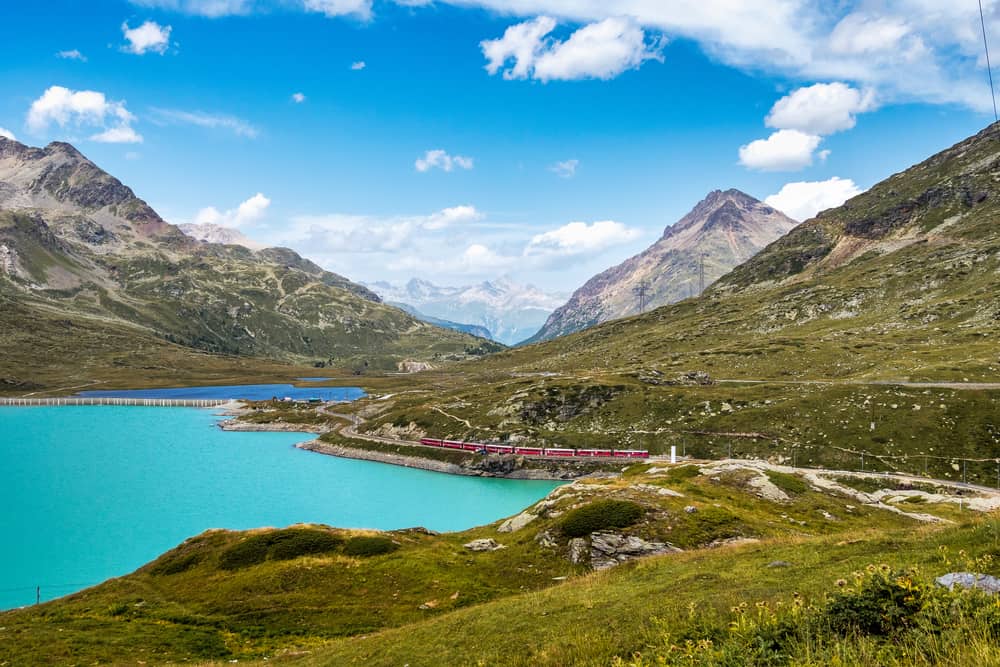
Travelling by train is one of the best ways to get around Switzerland. The network is fast, efficient, and incredibly scenic, with routes that pass lakes, mountains, and picture-perfect villages. Add in mountain cable cars and funiculars, as well as boat trips, and there’s plenty of travelling to be done, on even a short trip to Switzerland.
The downside? It’s expensive. The cost of travel in Switzerland can add up quickly, especially if you’re moving between destinations or planning mountain excursions.
To help manage costs, many visitors consider buying the Swiss Travel Pass. This prepaid pass can simplify your trip by providing unlimited travel on most public transport and allowing you to hop on and off as you like.
However, the pass can feel like a big upfront investment. It can also be confusing to decide if it’s worth it, especially given all the other ticket options available.
So, is the Swiss Travel Pass worth it? Or are you better off buying tickets individually?
The honest answer is: it depends – on where you’re going in Switzerland, what you plan to see and do, how you plan to get around, and how long you’re there.
For some itineraries, the Pass will definitely save you money. For others, you might find that there’s little difference when compared to purchasing individual tickets, or that there’s a better travel card you can buy.
The Swiss Travel Pass is often worth it if you’re travelling between multiple cities, using trains daily, and planning scenic mountain trips. It may not be as good value for slower itineraries based in one place, or if you manage to book discounted tickets in advance.
In this guide, I break things down to help you decide if purchasing the Swiss Travel Pass is worth it for you. I cover what the Pass is, and scenarios in which you might find it offers value (as well as some where it might not), highlighting some itineraries as examples. I also cover how to purchase the Pass and some Frequently Asked Questions (FAQs).
I focus on the two main types of Swiss Travel Passes, but information on the Swiss Half Fare Card can be found in the FAQ section towards the end.
TL;DR: What is the Swiss Travel Pass and is it worth it?
– The Swiss Travel Pass gives you unlimited travel on most public trains, buses, and boats, plus museum entry and discounts on mountain trips
– It’s likely to be worth purchasing if you’re travelling between multiple destinations, taking longer journeys, including scenic trains and mountain journeys, and value the convenience of not having to buy individual tickets
– However, the Pass may not be as valuable if you’re staying in one place or planning a slower-paced trip. Here, it may be better to buy individual tickets or consider a Swiss Half Fare Card
– Also factor in that some scenic trains and mountain excursions still require extra fees. To get the most value from your pass, plan in advance: decide what you want to do and when
What is the Swiss Travel Pass and what does it include?
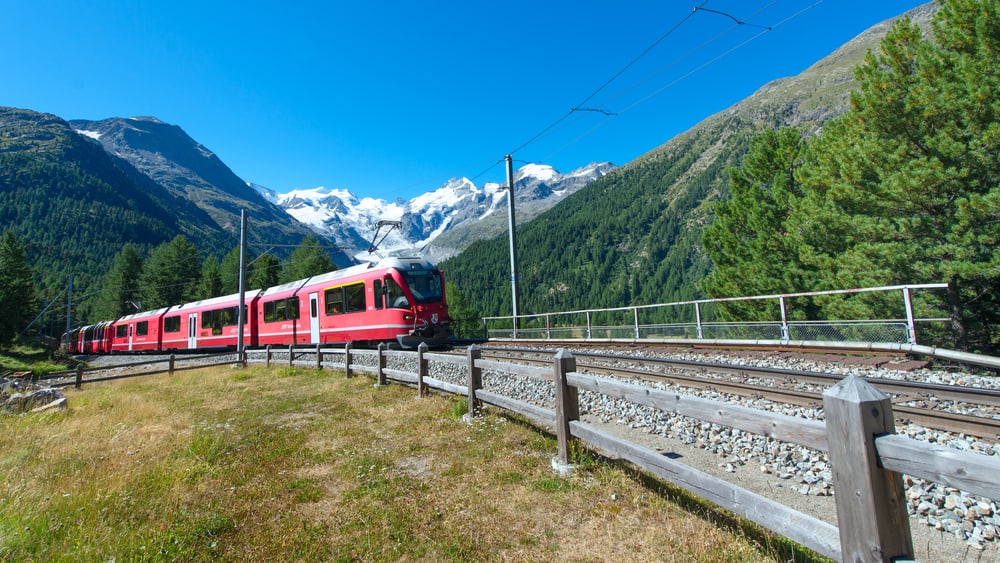
The Swiss Travel Pass is a single ticket you can buy that gives you unlimited travel on most of Switzerland’s public transport network. This includes most trains, buses, and boats between and within over 90 Swiss cities, as well as panoramic trains (but excluding any mandatory seat reservations). The full area of validity of the Pass is here.
The Pass also offers discounts on some mountain railways (typically 25–50%, although a few are fully included), and other attractions and activities. These include access to over 500 museums via the Swiss Museum Pass, many of which are popular with visitors.
You can buy both first and second class passes for different durations. For short trips, there are 3, 4 and 6 day passes; for longer trips, you can choose between 8 and 15 days.
There are two different types of passes:
- The Swiss Travel Pass, which covers consecutive days
- The Swiss Travel Pass Flex, which allows you to select which days you want to travel on within a one-month period
There is also a Swiss Half Fare Card. This gives you up to 50% off travel for a period of one month, including on mountain excursions. It does not, however, include entry to museums.
Benefits of the Swiss Travel Pass
The Swiss Travel Pass, as well as the Half Fare Card, can potentially save you money on your trip.
But the main Swiss Travel Pass also provides simplicity and certainty.
Instead of calculating ticket prices for every journey and then having to buy the tickets, you can just go where you like, avoid queues, and not have to find money for every journey you take.
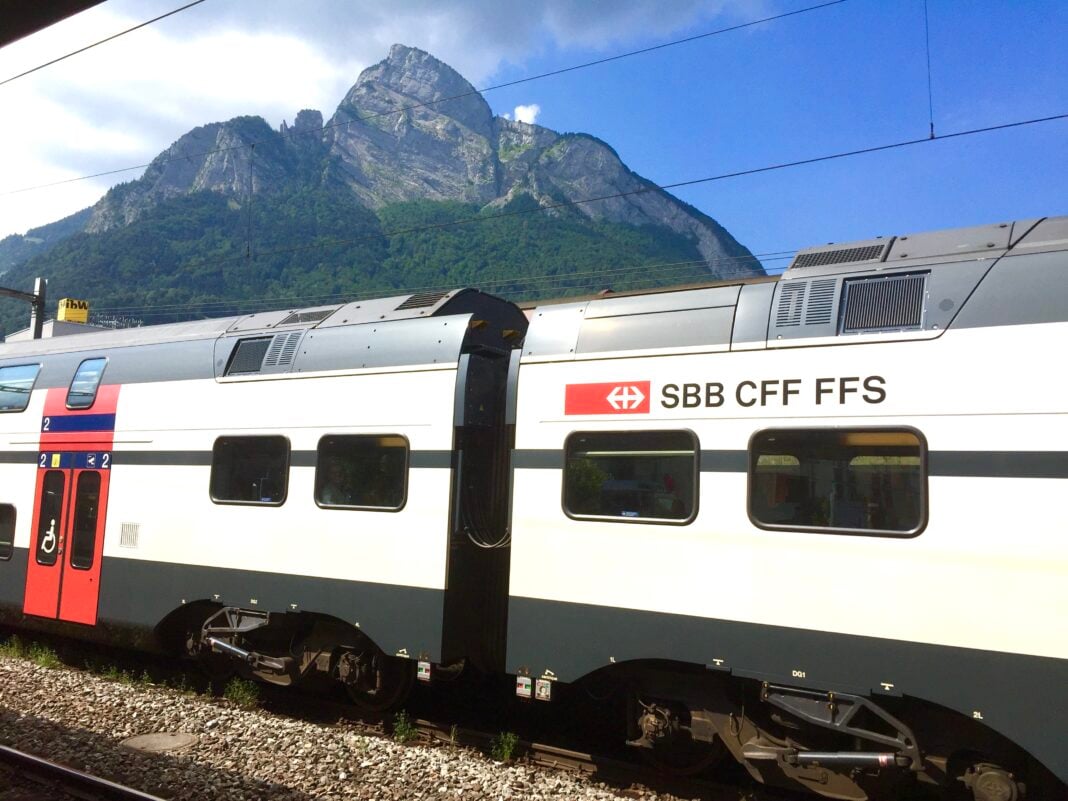
How much does the Swiss Travel Pass cost in 2026?
The Swiss Travel Pass varies in price, depending on the exact ticket you buy, the class of travel, and the age of the traveller.
Below I’ve set out the 2026 prices for adult travellers in second class. There are reduced prices for young people under 25 and for anyone under 16 travelling alone (children under 16 travelling with parents get added free of charge to their ticket as part of a Swiss Family Card).
Swiss Travel Pass Prices (2026)
| Type of Pass | 3 days | 4 days | 6 days | 8 days | 15 days |
| Swiss Travel Pass | 254 CHF | 309 CHF | 399 CHF | 439 CHF | 499 CHF |
| Swiss Travel Pass Flex | 289 CHF | 349 CHF | 424 CHF | 459 CHF | 519 CHF |
Prices correct as of April 2026, and may be subject to change
The Swiss Half Fare Card costs 150 CHF for adults.
As you can see, these passes and cards are not cheap – and first-class tickets are obviously more expensive. However, below I provide some real-life examples that you can browse to determine if any of them are worth the cost for you.
When is the Swiss Travel Pass worth it?
As mentioned above, whether the Pass is worth it depends on several factors and whether:
- You’re taking longer train journeys where individual tickets are expensive
- You want to include scenic trains, mountain journeys, or boat trips where you can get discounts with the Pass
- You value the convenience of not having to buy individual tickets
- You plan to visit some museums during your stay
If you’re fitting all your plans into a short break or planning something for every day of your trip, the Travel Pass is likely to be the one for you. If you’re having rest days in between travelling and sightseeing, consider the Travel Pass Flex.
Summary: The Swiss Travel Pass can be worth it if you’re travelling long distances between cities, using trains daily, and planning scenic mountain trips. It may not be as good value for slower itineraries based in one place.
Real Switzerland travel itineraries: when the Swiss Travel Pass can save you money
Let’s take some actual examples. Here you’ll see a comparison of the cost of the different itineraries using the prepaid Swiss Travel Pass versus buying tickets individually as you go along.
Using the SBB website, I’ve costed the individual fares based on:
– “Point-to-point” tickets; note that “Super Saver” tickets will be cheaper, but are subject to availability
– Train times that I think are realistic for the itinerary (so prices for other times may differ)
– Where entry prices for attractions (e.g. visiting the Jungfraujoch) vary by season, I’ve included the average
Point-to-point tickets: travel to your chosen destination at any time within a 24-hour period. They provide a degree of flexibility should you miss your train or if you only decide on your route at the last minute.
Super Saver tickets: these relate to a specific train that you book. If you miss it, you need to buy another ticket. Although they are cheaper, you need to book them in advance online – and they are subject to availability. If you’re planning a last minute trip, you may find they are not available.
In all cases, I’d recommend doing some ticket price calculations, as train prices change over time and the cost of the travel passes may increase in the future.
Example 1: an 8-day Swiss waterfall and mountain trip
- Route: Lucerne → Interlaken → Zermatt, with trips to Mount Rigi, the Jungfraujoch, and the Matterhorn.
- Total adult savings with a Swiss Travel Pass = up to 169 CHF (£160/ €183/ $216)
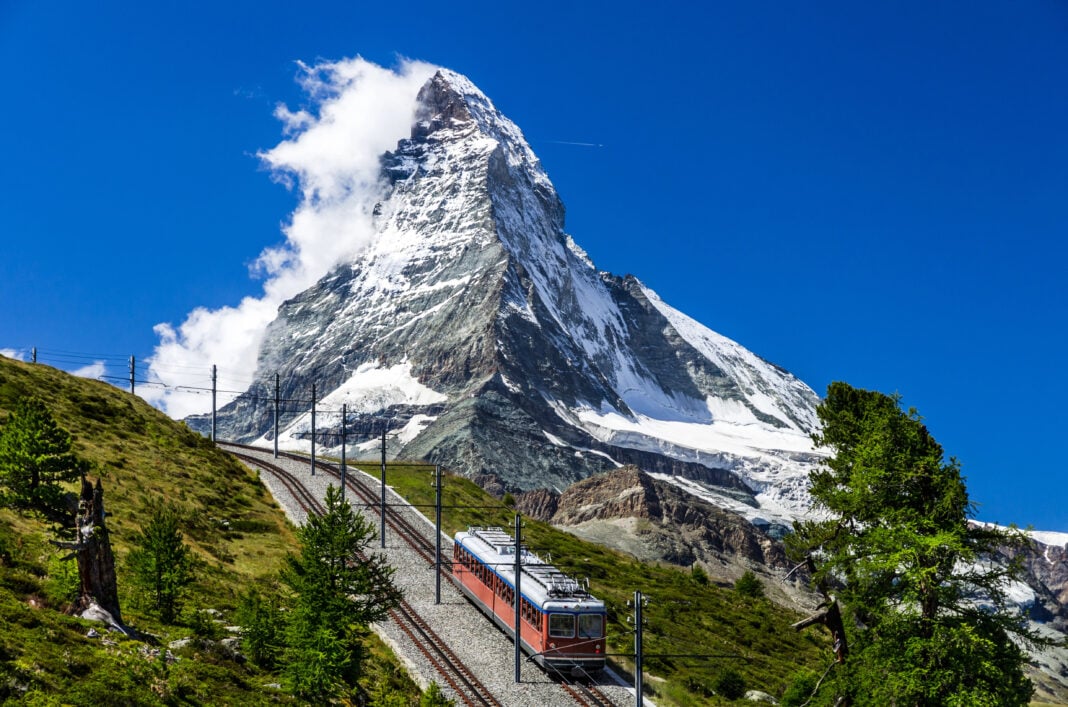
For this plan, an 8-day Swiss Travel Pass would be required at a cost of 439 CHF for adults travelling in second class.
| Itinerary | Approx. price (point-to-point tickets) | Cost with a Swiss Travel Pass |
| Day 1: Zurich airport to Lucerne | 31 CHF* | 0 |
| Day 2: Mount Rigi (return boat trip + Rigi railways) | 126 CHF | 0 |
| Day 3: Lucerne to Interlaken; Visit Harder Kulm | 108 CHF | 22 CHF |
| Day 4: Interlaken to Lauterbrunnen | 8 CHF | 0 |
| Day 5: Visit the Jungfraujoch | 253 CHF | 175 CHF |
| Day 6: Interlaken to Zermatt | 86 CHF | 0 |
| Day 7: Visit the Matterhorn Glacier Paradise | 118 CHF | 59 CHF |
| Day 8: Zermatt to Zurich airport | 134 CHF | 0 |
| Total | 864 CHF | 695 CHF |
In this example, the Pass would be worth purchasing: the itinerary includes several long-distance train journeys and multiple forms of transport on consecutive days.
And although you still have to pay a bit extra to add on some mountain trips, you’re getting a discount on these (and they can be eye-wateringly expensive!).
Example 2: a 6-day trip in the south west of Switzerland and around Lake Geneva
- Route: Geneva → Zermatt → Montreux → Geneva, with trips to the Matterhorn and a museum in Lausanne.
- Total adult saving with a Swiss Travel Pass = up to 71 CHF (£67/ €77/ $91).

In the following example, the first two days involve arriving in Geneva and exploring the city (click here for an itinerary for one day in Geneva).
If you’re staying in Geneva, you’ll often receive a free Geneva Transport Card from your accommodation (check in advance if you’re able to access this). You can get hold of this a few days before your visit and use it to travel from the airport to the city centre.
In this case, it doesn’t make sense to start a Swiss Travel Pass until your first day of longer travel – that way, you need only purchase a 4-day pass.
| Itinerary | Approx. price (point-to-point tickets) | Cost with a Swiss Travel Pass |
| Geneva airport to Geneva | N/A | N/A |
| Day 1: Geneva to Zermatt | 102 CHF | 0 |
| Day 2: Matterhorn Glacier Paradise; Zermatt to Montreux | 194 CHF | 59 CHF |
| Day 3: Lake Geneva cruise from Montreux; Lausanne Museum visit | 106 CHF | 0 |
| Day 4: Montreux to Geneva airport | 37 CHF | 0 |
| Total cost | 439 CHF | 368 CHF |
In this itinerary, the savings are less than in my first example – and would be smaller if you booked Super Saver tickets.
However, Super Saver tickets aren’t always available. With a Travel Pass you can also visit other things if there’s time to squeeze them in (e.g. a visit to Chillon Castle in Montreux, which would also be free) or travel on trains at times when individual tickets cost more.
So even though the savings may be more marginal, remember that you’re still getting the benefit of not having to book tickets individually. The Pass gives you flexibility, whereas booking individual tickets fixes your route and timing more, especially if you buy the cheaper Super Saver train tickets.
When the Swiss Travel Pass is not worth it
As you can see above, there are trips where purchasing the Pass is definitely worth it.
However, there will also be scenarios where it’s unlikely to be worth your money and you may get better value by booking everything individually.
Example 1: My recent trip to Lake Geneva
A recent 3-day trip I took involved two nights in Lausanne and two nights in Geneva. This wasn’t my first time in either city – it was a chance to spend some quality time with a close friend in a beautiful setting.
So other than travelling by train to and from the airports and between the cities, we spent time wandering around the lakeside, strolling through beautiful gardens, and sitting catching up in coffee shops.
In this instance, the Pass would not have been worth it for us. Our train travel totalled around 48 CHF. I did visit the Red Cross Museum after my friend had left, but this only added an extra 15 CHF.
Example 2: A previous trip where I used Zurich as a base
Likewise, I once spent four nights in Zurich, using the city as a base from which to day-trip to other places: Winterthur, Schaffhausen, and the Rhine Falls (there are a lot of places to choose around the Zurich area, as you can find out here).
Adding together my train travel, plus activities covered by the Swiss Travel Pass (visiting three museums in Winterthur, for which I bought a one-day Winterthur Museum Pass for 29 CHF), totalled 74 CHF.
I also took a boat trip on the Rhine Falls and a journey on the Rhyfall Express (see my separate post on a day out here for more details), but neither is covered by the Swiss Travel Pass.
For this trip, I would have completely overspent had I bought the Pass in advance.
So if you’re planning a trip in a single place and spending most of your time there, some of which might be exploring on foot and popping into the odd museum, then think twice about forking out on the travel Pass.
The decision on to buy a Pass also needs to take into account additional costs that are required (e.g. where mandatory seat reservations are required) and the mountain trips you want to take. Although some mountain excursions are fully covered – e.g. Mount Rigi – some only offer a 50% reduction, with others even less.
How to purchase the Swiss Travel Pass
You can purchase the Swiss Travel Pass here, or online from the SBB website for Swiss trains. You can also buy them at staffed Swiss train stations.
You can print your pass off, but as you’ll be travelling around, it may be more convenient to store the PDF ticket electronically or on the SBB mobile app (download this so you’re not having to rely on the internet to access it or draw too heavily on your mobile data).
Swiss Travel Pass: overall
Overall, I’d say that if you’re moving around a lot, taking long distance journeys that are expensive, and value flexibility, the Swiss Travel Pass is often worth it. If your trip is slower-paced or planned in advance, individual tickets or a Half Fare Card (see below) may come out cheaper.
Check prices before you travel to make sure you’re buying the Pass that offers the greatest value.
Click here to explore the savings you can make with the Swiss Travel Pass.
Swiss Travel Passes: Frequently Asked Questions
Can I use my Swiss Travel Pass on the panoramic trains?
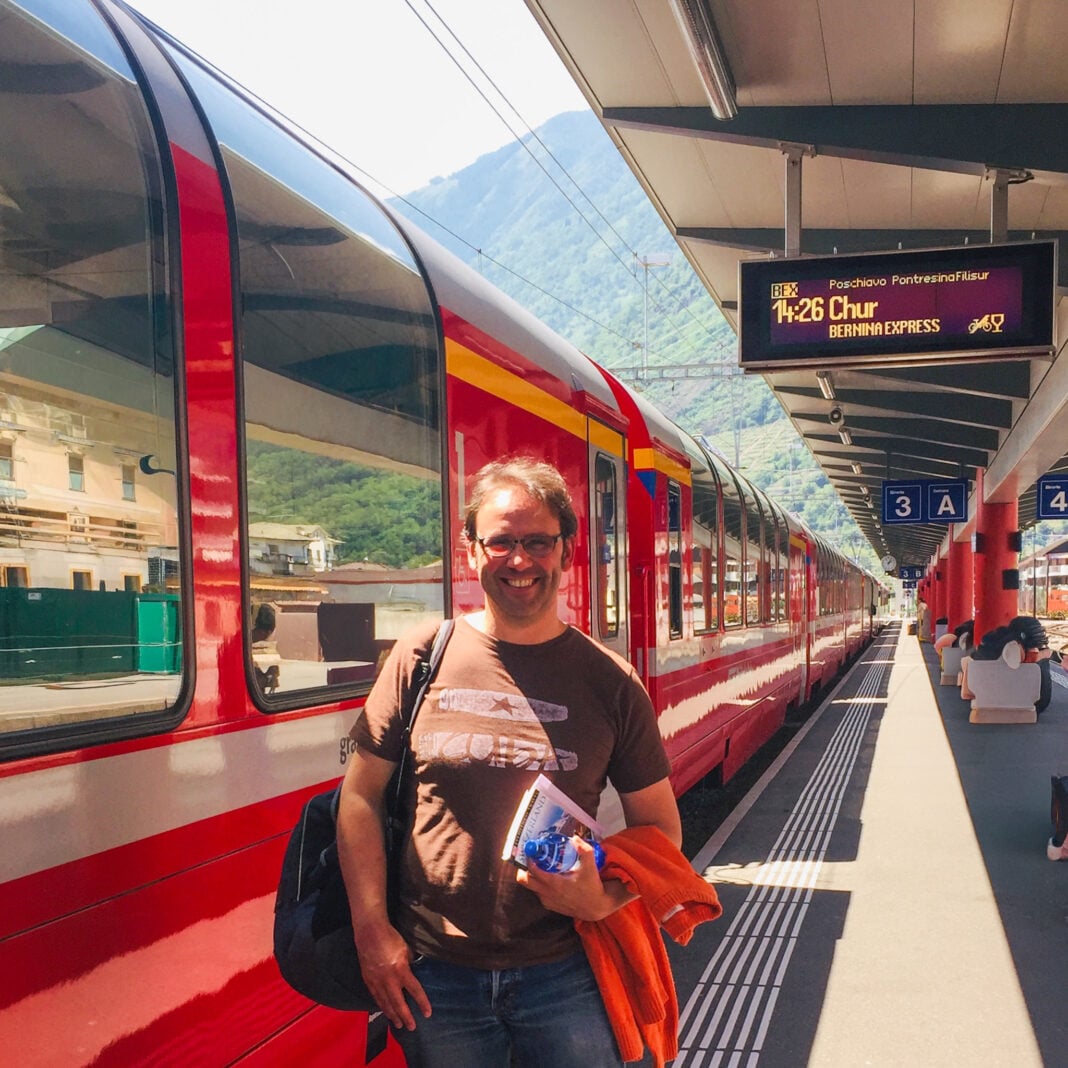
Yes, the pass covers panoramic trains such as the Bernina Express, Glacier Express, and the Golden Pass Express.
However, be mindful that you are required to book a seat for these journeys, and you need to cover the cost of these, which can be expensive.
Which mountains are included in the passes and cards?
Both types of Swiss Travel Passes, as well as the Half Fare Card, give discounts for mountain trips. However, the level of these vary.
For most mountain railways, the Half Fare Card provides around a 50% discount.
Indicative savings for mountain trips using the Swiss Travel Pass and Swiss Travel Pass Flex are typically as follows (but may vary depending on route and time of year):
- Mount Rigi: fully covered
- Mount Pilatus: 50%
- Mount Titlis: 50%
- The Jungfraujoch: 35%
- Matterhorn Glacier Paradise: 50%
- Schilthorn: 50%
Should I book a first-class or second-class train ticket?
Unfortunately, I’ve never been lucky enough to travel first-class in Switzerland. But I’ve never had a problem and, compared to train travel in the UK, have always been impressed.
That said, I’ve read that first-class does give you extra space and that the carriages are quieter, which can be a bonus in peak season when some of the journeys you might want to take are popular and become crowded.
So it really depends on how much you value your comfort as opposed to budgeting, in what is an already expensive country.
Does the Swiss Travel Pass always save you money?
No, the Pass does not always save you money. On some itineraries – for example, the first two I have set above – there will be savings.
However, for others – particularly those where you’re staying in just one or two places – the savings may be minimal, or it may be cheaper to buy tickets separately (or to purchase the Half Fare Card).
Or you may find buying a Saver Day Pass is more useful to you (see below).
What is the Swiss Half Fare Card?
The Swiss Half Fare Card provides up to 50% off almost all journeys within a one-month period, plus some discounts on mountain excursions. It does not, however, cover entry to museums.
The Half Fare Card currently costs 150 CHF for adults. Tickets for your train trips then have to be bought individually, as needed.
The Swiss Travel Pass Flex vs Swiss Half Fare Card: which is better?
Both the Swiss Travel Pass Flex and the Half Fare Card cover travel for one month. However, with the Flex Pass, you’re limited to the number of days you’ve bought (3, 4, 6, 8, or 15). On these days, you get unlimited travel on the selected days.
The Half Fare Card provides up to 50% off almost all journeys.
The other key difference is how you pay for your travel.
The Swiss Travel Pass is better if you want the convenience of hopping on and off different forms of transport or making diversions at no extra cost. If you opt for the Half Fare Card, tickets must be purchased individually, as needed.
When would it make more sense to buy a Half Fare Card?
The Swiss Half Fare Card gives you reductions of up to 50% on travel for a period of one month, including discounts on mountain excursions. It currently costs 150 CHF for adults.
This card is likely to be valuable if you’re based in a small number of places, you’re not travelling every day, but you do plan to do some specific, expensive, day trips. It’s also something to consider if you’re in Switzerland for more than a couple of weeks as the travel Passes do not stretch beyond 15 days.
Example
As an example, if you were planning a 6-day trip based in Interlaken, you might decide to do a few day trips out exploring, with rest days in between.
In this instance, you could buy:
- a 4-day Flex Pass to cover the cost of your travel on four non-consecutive days and discount a couple of days of sightseeing
- a Half Fare card that would cover discounts on travel and sightseeing
Below is a comparison of how the costs would stack up in this example and showing how, in this scenario, the Half Fare Card wins out. If you were to buy the Flex Pass, you’d be “wasting” some of its cost on relatively short train journeys and getting a smaller discount on the trip to the Jungfraujoch.
And if you’re willing to book fixed trains in advance, Super Saver tickets can significantly reduce costs, which, again, makes a Half Fare Card suitable.
| Itinerary | Cost with Swiss Travel Pass Flex (starting on arrival in Lucerne) | Cost with Half Fare Card (starting on arrival in Switzerland) |
| Zurich airport to Lucerne | 31 CHF | 16 CHF |
| Day 1 of Pass: Visit Mount Rigi from Lucerne | 0 | 63 CHF |
| Rest day | – | – |
| Day 2 of Pass: Lucerne to Interlaken | 0 | 30 CHF |
| Day 3 of Pass: Visit to the Jungfraujoch | 175 CHF | 131 CHF |
| Rest day | – | – |
| Day 4 of Pass: Interlaken to Zurich airport | 0 | 39 CHF |
| Total | 555 CHF | 429 CHF |
Top tip: avoid using one of your Flex Pass days on a low-cost travel day. It’s best used on a long-distance, expensive journey.
When does buying a Swiss Travel Card Flex make more sense over a Half Fare Card?
In the above scenario, the Half Fare Card beats the Flex Pass because the cost of the latter is high and not offset by including high-cost train trips in the itinerary. But if you did have day trips covering long distances, or lots of scenic days out, you may find the Flex Pass would make more sense.
For example, for a 7 night trip where you buy a 3-day Flex Pass and use it intensively on some days in between rest days – say to move between Geneva and Zermatt, visit the Matterhorn, travel to Montreux, take a lake cruise and then return home via Zurich, you could make savings.
The scale of savings will vary depending on whether you manage to bag a Super Saver ticket, but they are savings nonetheless.
Add on the fact that the Flex Pass gives you the convenience of hopping on and off transport, not having to calculate ticket prices or search for Super Saver fares, having a more flexible itinerary, and visiting museums, then you may value it more than the Half Fare Card.
So consider the Flex Pass over the Half Fare Card when:
- You have intensive “big” long-distance travel and sightseeing days
- Sightseeing trips where you might want to make diversions and hop on other forms of transport
- You don’t want to buy tickets individually or go online regularly to try to find Super Saver train tickets
- You want flexibility and convenience
But as mentioned before, if the difference in costs is important to you, calculate in advance to see whether the Flex Pass really is a saving.
All this underscores the importance of costing out your own personal itinerary before making your decision and deciding how important the convenience of a prepaid pass is for you.
What is the Saver Day Pass?
The Saver Day Pass gives you unlimited travel for a chosen day.
Note, however, that you have to buy this in advance. If you do this a few months in advance, it is cheaper, and it is also cheaper if you already have a Half Fare Card. And while you have to travel on your selected day, unlike Super Saver tickets, you can travel at any time or route on that day.
You can buy these tickets online or in the SBB app. They are subject to availability.
If you are thinking of purchasing this type of Pass, check out the terms and conditions here. Unlike some of the other Passes, it does not offer discounts on mountain cable cars and railways, unless you also have a Half Fare Card.
Cost out the price of separate tickets, Passes, and Cards before you book to make sure the investment in them is worth it.
Are there any extra costs for the Swiss Travel Pass?
You do need to pay extra for seat reservations on the panoramic trains (the higher-end trains with larger windows for viewing the scenery), so factor that into your costings.
Some mountain excursions are also not fully included: some cover 50% of the costs, whereas others (such as the Jungfraujoch) cover less than that.
Top tip: to avoid expensive seat reservations on the panoramic trains, you can opt to travel on the same route on a regular train.
How do I get the most value from my Pass?
To get the most value from your Pass, plan in advance: decide what you want to do and when. That way, you’ll know how many days to buy a Pass for and whether the main Swiss Travel Pass, the Flex Pass, or even the Half Fare Card is better for you.
Plan longer trips, mountain journeys, museum visits, and experience different forms of transport to get full value.
Where can I purchase the Swiss Travel Pass?
You can purchase the Swiss Travel Pass here or online from the SBB website. You can also buy them at staffed Swiss train stations.
You can print your pass off, but as you’ll be travelling around, it may be more convenient to store the PDF ticket electronically or in the SBB mobile app (download this so you’re not having to rely on the internet to access it).
*Costings are rounded and based on research on the SBB website in April 2026. In all cases, please do your own calculations if you plan to book, as Switzerland train prices change over time and the cost of the travel passes may increase in the future.