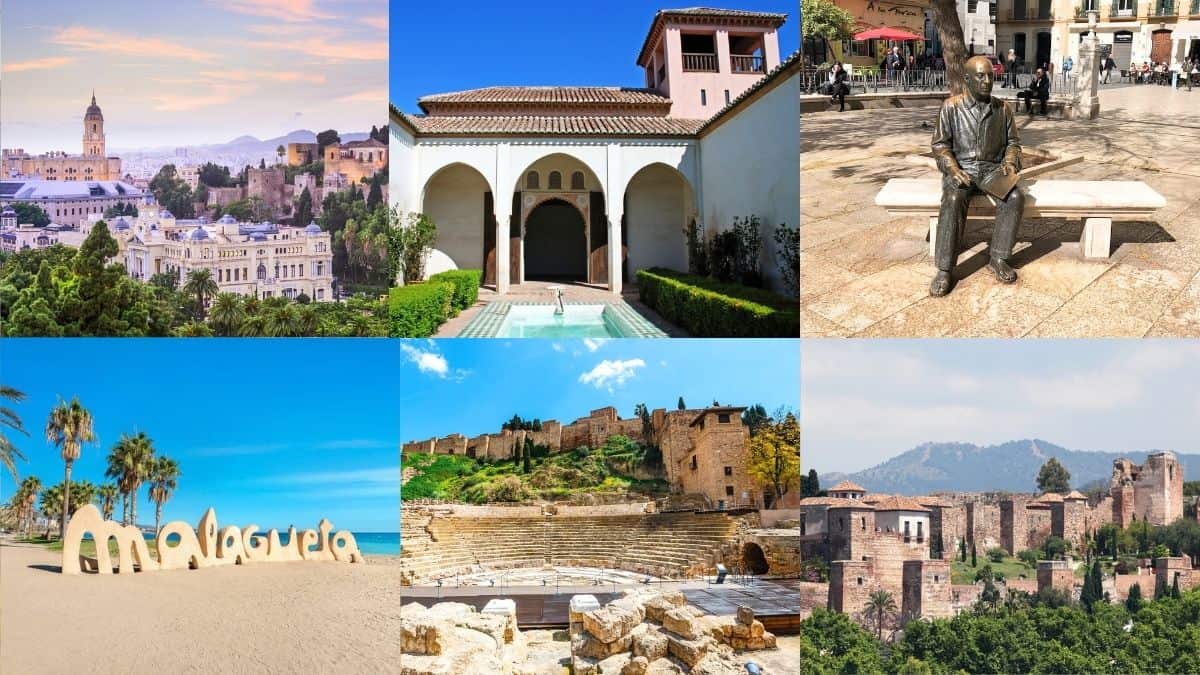
2 days in Malaga: the perfect itinerary for a short break
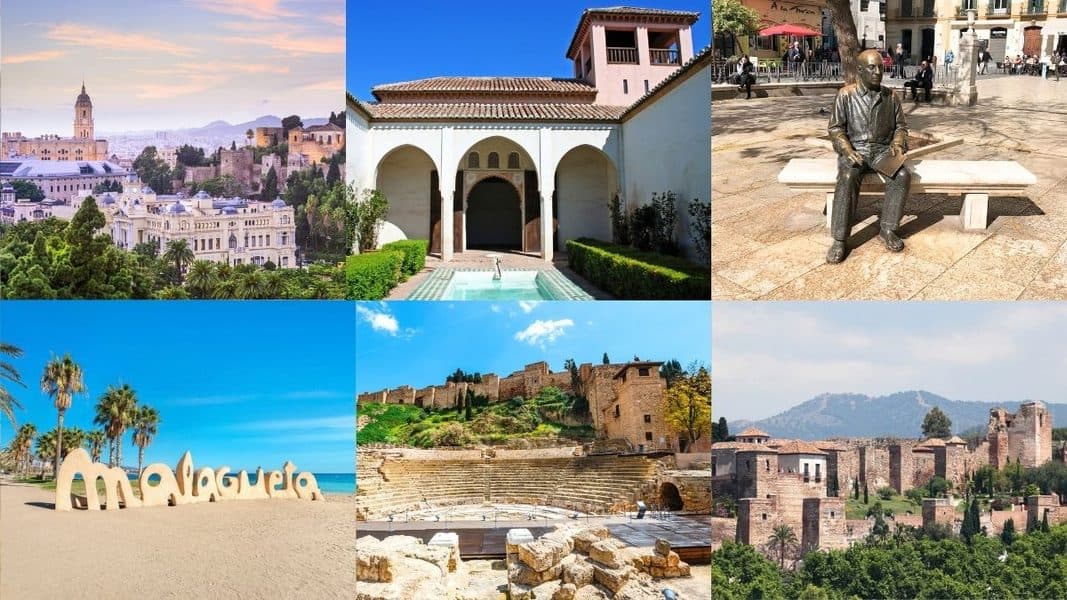
If you’re visiting Malaga for the first time and only have two days, you might be wondering how best to organise your time and which sights to prioritise. The good news is that many of Malaga’s main attractions are relatively close together, making it an easy city to explore on a short break.
Having visited Malaga myself, I’ve created this 2-day itinerary for first-time visitors. It covers the main sights you’ll want to see, including the Cathedral, Alcazaba, and Gibralfaro Castle, as well as Malaga’s Picasso connections, Atarazanas Market, the waterfront and beach.
I’ve planned each day to help you make the best use of your time, grouping nearby sights together and including suggested timings for each stop. You’ll also find practical tips, suggestions for where to stop for lunch, and ideas for a more relaxed final afternoon.
My Malaga 2-day itinerary at a glance
This 2-day Malaga itinerary focuses on old town sightseeing on day 1. On day 2, you can discover the city’s connections with the famous artist Pablo Picasso before heading to the port and beach area. I’ve then provided a choice of ways to spend your final few hours in the city.
Day 1
– Malaga old town
– Malaga Cathedral
– Atarazanas Market
– Gibralfaro Castle
– The Alcazaba
– The Roman Theatre
Day 2
– Plaza de la Merced
– Picasso’s birthplace
– The Church of Santiago
– Museo Picasso Málaga
– Muelle Uno
– Malagueta beach
– Chill out afternoon: spend time on the beach, visit a hammam, take a boat trip, or book a food experience
2 days in Malaga itinerary in detail: day 1
Day 1
– 10 am: Visit Malaga Cathedral
– 11 am: Take a stroll through Malaga old town
– 12 pm: Explore Atarazanas Market and stop for lunch
– 1.30 pm: Take the bus to Gibralfaro Castle
– 3.00 pm: Go inside Malaga’s beautiful Alcazaba
– 4.15 pm: See Malaga’s Roman Theatre
10.00 am: Visit Malaga Cathedral
Suggested duration: 60 minutes
Start your sightseeing with a visit to Malaga’s magnificent cathedral (Catedral de Malaga), which sits in the heart of the old town.

The cathedral is nicknamed ‘La Manquita’, which roughly translates as ‘the one-armed lady’, because parts of the building were never completed, including its second bell tower.
Head inside to explore its impressive interior, with its multiple chapels, religious paintings and beautiful stained-glass windows. There’s also a small garden outside that you can see as you leave.
If you want to see Malaga from above, you can climb around 200 steps to the cathedral’s rooftop. You get wonderful views across the city from here.
Book advance tickets for Malaga Cathedral + an audio guide here.
11.00 am: Take a stroll through Malaga old town
Suggested duration: 60 minutes
After visiting the Cathedral, spend some time exploring some of the main streets and squares in Malaga’s old town. It’s full of charming little streets and squares lined with beautiful buildings, plus plenty of cafés and restaurants you might want to earmark for later.
Closest to the Cathedral is Plaza del Obispo, a lovely little square that is also home to the striking yellow Episcopal Palace (Bishop’s Palace).
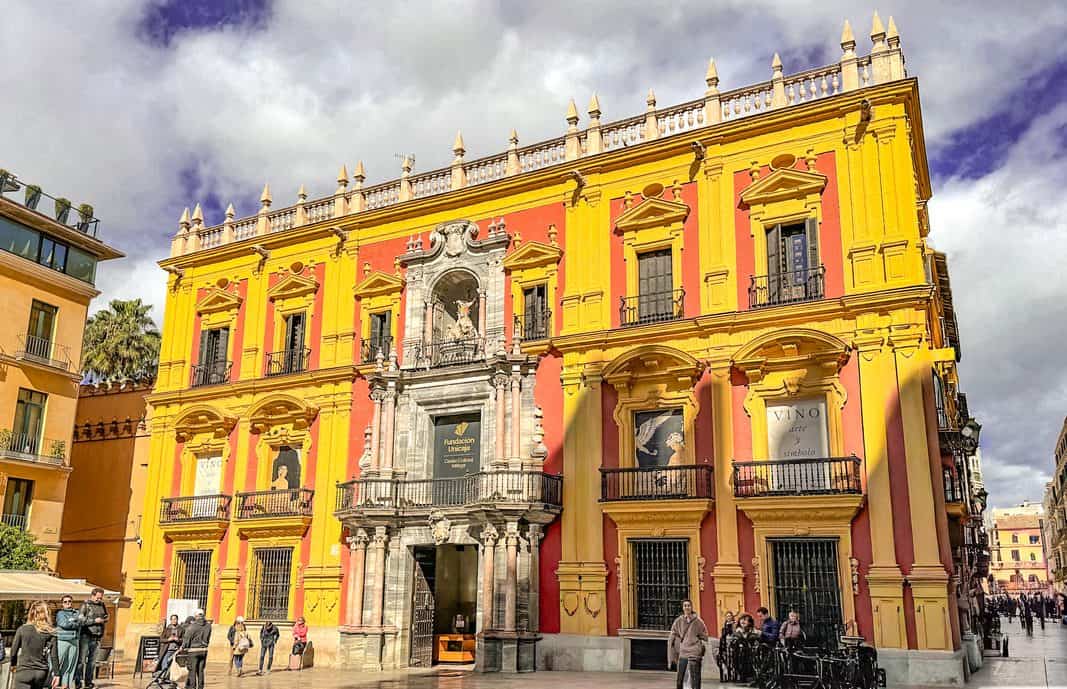
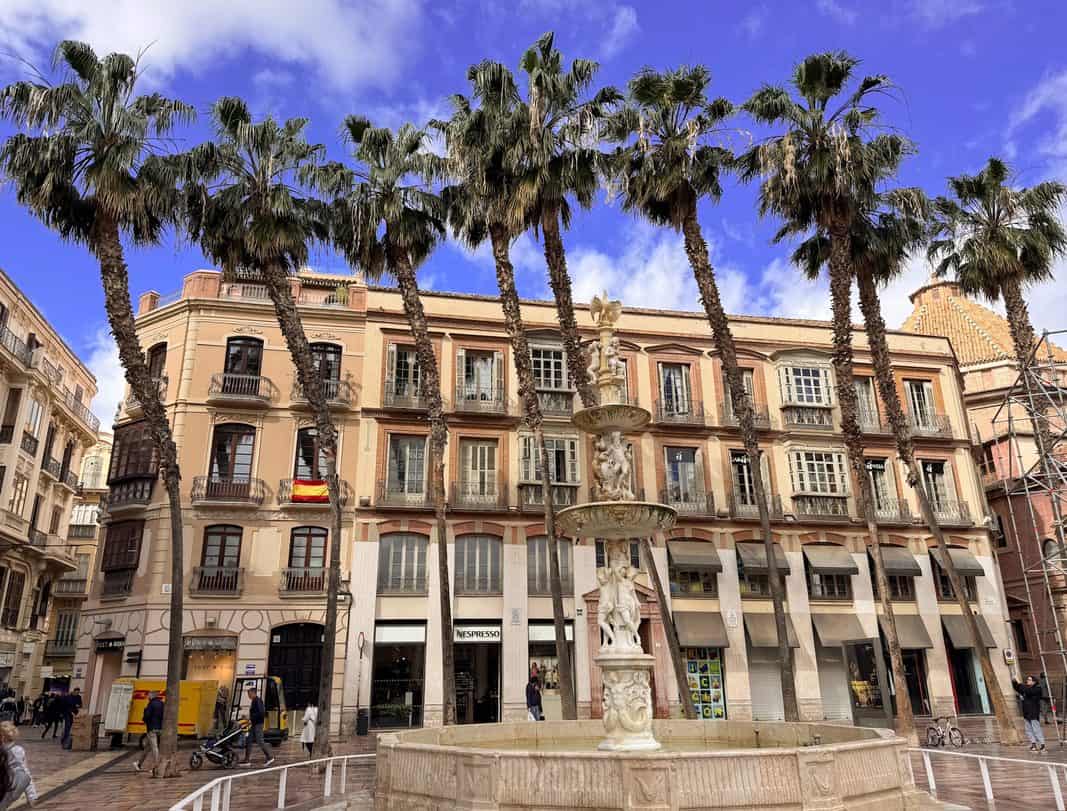
From here, walk along Calle Molina Lario and into Calle Santa María, which will take you to Plaza de la Constitución. Here you’ll see the 16th-century Genoa Fountain. However, for me, one of the standout features is the unusual slanting trees that frame the grand buildings on one side of the square.
You can then wander down Calle Marques de Larios (often just called Calle Larios), Malaga’s impressive pedestrianised shopping street and one of the main streets in the historic centre.
After exploring the old town, head to Atarazanas Market for lunch.
12.00 pm: Explore Atarazanas Market and stop for lunch
Suggested duration: 1.5 hours
There are plenty of places to eat in this part of Malaga. But if you’re visiting Malaga for the first time, I’d recommend heading to the Mercado Central de Atarazanas, Malaga’s central market, where you can combine sightseeing with lunch. It is around a 10-minute walk from the bottom of Calle Larios.
The first thing you’ll notice is its impressive entrance. Step inside and you’ll find a large, bustling market with stalls selling everything from fresh seafood, cheese and meat, to colourful displays of fruit and vegetables.
Around the sides are small bars and kiosks serving freshly prepared food and drinks. You can stand at the counter and watch (and smell!) your food being prepared or, if you can find a table, sit outside and order from the staff.
There’s plenty to choose from, including fresh seafood, tortilla, and patatas bravas, plus local wine and beer. We tried Malaga’s famous sweet, fortified, wine when we visited (we loved it!). The food was excellent and the atmosphere was really buzzy, so I’d definitely recommend eating here if you can.


Top tip: If you’re spending a weekend in Malaga, visit the market on Saturday as it’s closed on Sundays. It also closes in the afternoon, so don’t visit too late, especially if you want to eat here.
1.30 pm: Take the bus to Gibralfaro Castle
Suggested duration: 1.5 hours, covering the journey and time in the castle
After lunch, catch the bus to the Castillo de Gibralfaro. This 14th-century castle sits on top of Mount Gibralfaro and offers sweeping views across the city and surrounding area.
The easiest way to reach the castle is by bus. The number 35 public bus stops at Gibralfaro, as does Malaga’s hop-on hop-off sightseeing bus.
After exploring the fortress, walk along the battlements for some of the best views. From here, you can look out over the harbour and city and down into Malaga’s bullring.
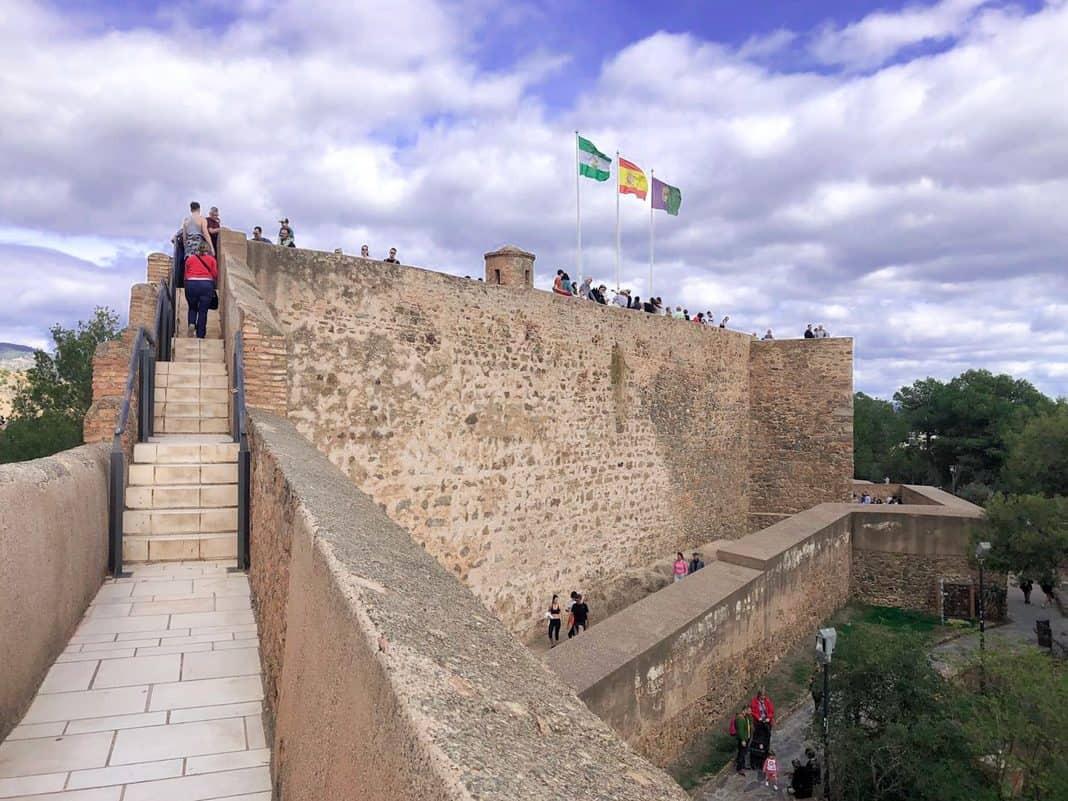
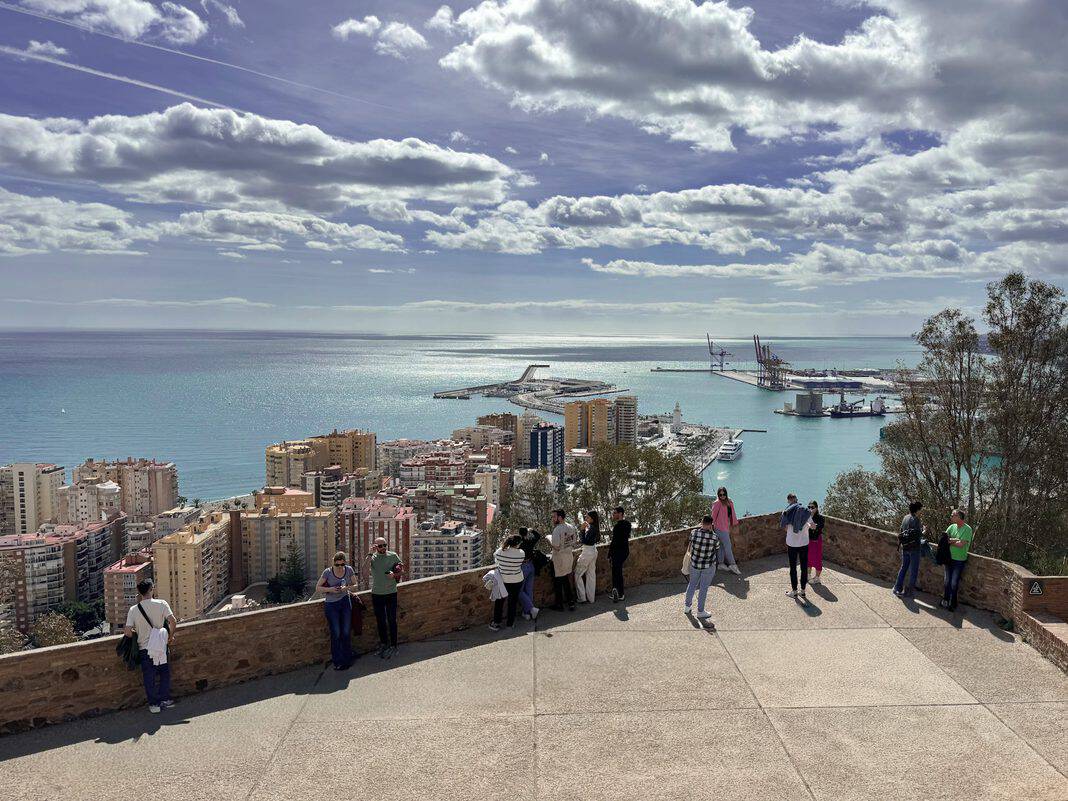
There’s also a small museum where you can learn more about the castle’s history and see a model showing the castle and nearby Alcazaba. There’s also a small café and toilets on site.
Entry to the castle is 7 euros. You can book tickets here.
If you plan to catch the public bus, allow around 45 minutes to get there. This builds in time to find the bus stop, wait for the bus and then get to the castle. The journey itself takes around 15–20 minutes.
3.00 pm: Go inside Malaga’s beautiful Alcazaba
Suggested duration: Around 1 hour 15 minutes.

From Gibralfaro Castle, walk downhill towards the Alcazaba of Malaga along the Paseo de Don Juan de Temboury. The walk takes around 20 minutes and offers more great views over Malaga along the way.
This former Moorish palace is more visually spectacular than the castle, so I’d allow a bit more time to explore here. As you wander around, you’ll see beautiful courtyards and gardens, distinctive archways, and intricate Moorish designs.
Make sure you have plenty of camera battery left, as you’ll no doubt be taking lots of pictures!


You can also walk along parts of the ramparts, although at a lower level than at Gibralfaro Castle. Some parts of the site are quite steep, so bear this in mind if you have mobility issues.
There’s a 7 euro entrance fee to visit the Alcazaba.
And if you’d like to learn more about its history, you can also book a guided tour of the Alcazaba and Roman Theatre.
Top tip: If you’re visiting both Gibralfaro Castle and the Alcazaba and don’t want visit as part of a guided tour, buy a combined ticket rather than separate tickets for each attraction. It will save you money.
4.15 pm: See Malaga’s Roman Theatre
Suggested duration: 20 to 30 minutes
After leaving the Alcazaba, visit the Roman Theatre (Teatro Romano de Málaga), which sits just below it. This well-preserved 1st-century theatre was only discovered in the 1950s. Pop in for a closer look, and visit the interpretation centre to learn more about the theatre and its excavation.

Entrance is free.
Alternatively, you can visit as part of a guided tour that also includes the Alcazaba.
Top tip: if you want to visit the Roman Theatre, bear in mind that it is closed on Mondays.
After the Roman Theatre, you’re back in the old town and well placed to have a drink before an evening meal or some tapas.
Malaga itinerary: day 2
Day 2
– 10.00 am: See Picasso’s birthplace and explore Plaza de la Merced
– 10.45: Walk through the old town and see the church where Picasso was baptised
– 11.15: View some of Picasso’s art
– 12.45 pm: Explore Muelle Uno, Malagueta beach, and stop for lunch
– From 2.45 pm: Afternoon chill out – relax on the beach, take a dip in Arab baths, book a boat cruise, or sample the local food on a tapas tour
10.00 am: See Picasso’s birthplace and explore Plaza de la Merced
Suggested duration: 45 minutes
As the birthplace of Pablo Picasso, it’s not surprising that Malaga has several attractions associated with the famous 20th-century artist. So I’d spend the first part of day 2 learning more about him and his connection with the city.
Start in the Plaza de la Merced. Here you’ll find the Museo Casa Natal de Picasso, the house where Picasso was born in 1881.
The small museum occupies a house on one side of the square and focuses more on Picasso himself and his family, with personal items and works by both Picasso and his father.
It’s worth visiting if you want to learn more about the artist’s early life and his connection with Malaga. You can nip in for a short visit (the entrance fee is currently only €3).
But even if you decide not to go inside, make sure you spend some time in Plaza de la Merced. It’s one of my favourite squares in Malaga.
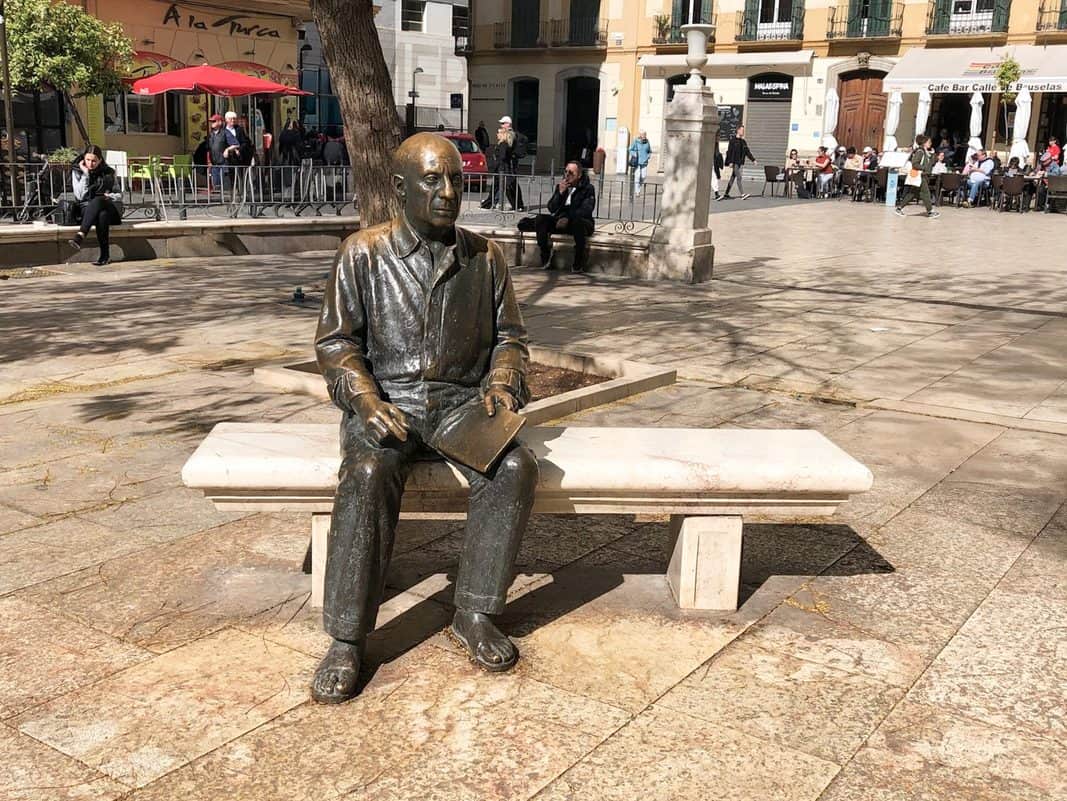
There’s a large obelisk in the centre and grand buildings lined with bars and restaurants. You’ll also find a statue of Picasso sitting on a bench – don’t miss the chance to take a photo sitting next to him!

10.45 am: Walk through the old town and see where Picasso was baptised
Suggested duration: 30 minutes
From Plaza de la Merced, walk along Calle Granada towards the Picasso Museum.
Calle Granada is one of the main streets in Malaga’s historic centre and is lined with grand buildings. Look out for the Church of Santiago along the way. This is Malaga’s oldest church and is where Picasso was baptised in 1881.
If it’s open, you can pop inside for a quick look. Entrance is free.
11.15 am: View some of Picasso’s art
Suggested duration: 1 to 1.5 hours
Just off Calle Granada is the Museo Picasso Málaga, the city’s main museum showcasing the artist’s work.
Its collection includes around 140 works spanning different periods of Picasso’s career, giving you a chance to see how his work developed over time. The museum is housed in the historic Palacio de Buenavista.
Tickets for the museum are 13 euros. Book here.
Top tip: Book in advance if you can. This is one of Malaga’s most popular attractions, and the queue was very long when we visited.
You can book entry with a guided tour here.
12.45 pm: Explore Muelle Uno, Malagueta beach, and stop for lunch
Suggested duration: 2 hours, including lunch.
After your morning sightseeing, head south to Malaga’s waterfront for lunch. Walk through Parque de Málaga, a lovely leafy stretch of greenery that runs alongside the waterfront.
A shady pathway lined with trees and tropical plants runs through the middle. This will take you towards the Muelle Uno promenade and port area.
Stroll along the waterfront and you’ll eventually reach the colourful Centre Pompidou Málaga, another art gallery. You’ll also come across shops and market stalls to browse, plus plenty of bars and restaurants where you can stop for lunch.

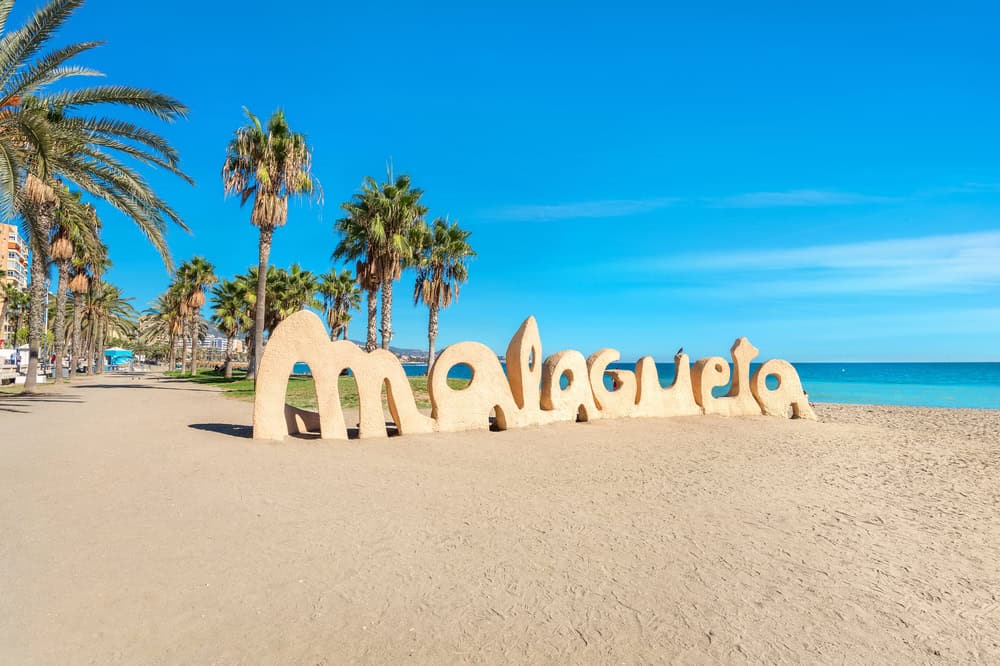
Alternatively, you could continue a little further to Malagueta Beach (Playa de la Malagueta). This long sandy beach has plenty of places where you can eat, including the small beachfront bars known as chiringuitos. These are great places to try some of Malaga’s seafood, particularly espetos – sardines cooked on skewers.
And if you can, snap a picture of yourself with the big Malagueta sign on the sand!
From 2.45 pm: Afternoon chill out
By mid-afternoon, you’ll have covered most of the main sights on this 2 day Malaga itinerary. So for the rest of the day, I’d slow things down and spend a bit of time chilling out. You have a few options to choose from, depending on how much time you have, the time of year you visit, and your budget.
Relax on Malagueta Beach
If the weather is good, one of the easiest options is to spend a couple of hours on Malagueta Beach, especially as you’ll already be in this part of the city.
It’s Malaga’s main city beach and is just a short walk from Muelle Uno, so it fits easily into this itinerary. Find a spot on the sand, go for a swim, or stroll along the seafront.
And best of all, this option is completely free!
Relax in a traditional hammam
Another option is to book a session at the Hammam Al Ándalus Málaga. If you opted for lunch in Muelle Uno, it’s around a 15-minute walk. If you’re at the beach, I’d leave about 25 to 30 minutes to get there.
These beautiful Arab baths are a reminder of Malaga’s past and contains has a series of baths, plus a steam room, where you can unwind and really relax. You can book tickets for the bath only, and if you want add on a massage.
Whichever you choose, this is an ideal way to wind down after two busy days of sightseeing, and lots of walking.
The hammam is back in Malaga’s historic centre, in Plaza de los Mártires, close to Plaza de la Constitución. This makes it well located for an evening out in the old town.
You can book a session at Hammam Al Ándalus Málaga here.
Take a boat trip
Alternatively, you might want to see Malaga from the water on a boat trip, especially if you visit during the summer months.
Several trips leave from the port at Muelle Uno, so this is particularly easy to fit into the itinerary after lunch. Depending on the time of year, you can choose from short sightseeing cruises, sailing trips, and sunset cruises.
You can browse and book Malaga boat trips here.
Sample local food and wine on a tour
Finally, you could spend the late afternoon or evening discovering more about Malaga’s food and wine.
You can choose from various food tours, tapas tours, and wine-tasting experiences that let you try local specialities while learning more about the city’s food culture.
We often go on food tours when we’re away and love them. They’re a great way to learn more about a city, meet new people, and eat out – and they often include so much food you don’t need to pay for a separate dinner!
Explore Malaga food and wine tours here.
How to make the most of 2 days in Malaga
Two days is enough time to see many of Malaga’s highlights, particularly as the historic centre is compact and easy to explore on foot. It’s also close to the waterfront area, so you easily combine the two.
To help you make the most of your time, I’d recommend:
- Staying centrally. If you can, stay in or close to the historic centre. You’ll be within walking distance of most of the main sights and won’t waste valuable sightseeing time travelling in and out of the city.
- Planning your sightseeing by area. Malaga is very walkable, but as with all short breaks, you’ll maximise your time if you group nearby attractions. This itinerary does that, so I’d follow this so you’re not moving between multiple different parts of the city.
- Booking popular attractions in advance. This is particularly worth doing for places such as the Picasso Museum. Queues can be long, which means you’ll spend valuable time waiting around, plus you don’t want to come away disappointed if you find there are no tickets left. If you decide to visit the hammam, I’d also book in advance.
- Checking opening days and times. Having been caught out before, I now always check opening days, particularly for museums, as some cities have one day during the week when they are closed. In Malaga this is the case for the Centre Pompidou which is closed on Tuesdays. The Atarazanas Market also closes at 2 pm and is shut entirely on Sundays. So check that the things you want to see will be open, and adjust your itinerary timings accordingly.
Where to stay for 2 days in Malaga
For short city breaks, I always try to stay as close to the city centre as I can afford. While prices might be slightly higher, staying centrally saves valuable sightseeing time and lets you walk to many main attractions instead of relying on public transport.
You can also often find reasonably priced places that are central but slightly away from the main squares, where accommodation can attract a higher premium.
For first-time visitors, I’d suggest staying in Malaga’s historic centre. This puts you close to most of the main attractions in this itinerary, as well as plenty of bars and restaurants for the evenings.
Alternatively, you could stay closer to the waterfront and Malagueta Beach. If you fancy combining sightseeing with some time by the sea, this area is a good option. It’s still within walking distance of the historic centre, so you won’t miss the main sights if you stay here.
You can check out accommodation options in Malaga below.
How to get around Malaga
Most of the top attractions in this Malaga itinerary are walkable, so you’ll find them easy to reach on foot.
The exception to this is Mount Gibralfaro with the castle. It rises to 130 metres and is a steep climb, so the bus is likely to be the most convenient way to get there.
The public bus number 35 runs from the old town to Mount Gibralfaro. The hop-on hop-off bus route also goes there.
Getting from Malaga Airport to the city centre
If you’ve arrived by plane, the airport is conveniently only a few kilometres from the city, so it is quick and easy to get into the centre. The train journey takes less than 15 minutes.
You can catch a train to the terminus, Malaga Centro Alameda station (fourth stop), using the C1 line. You could also get off at the main train station – Maria Zambrano. This is one stop earlier but is around 1 kilometre from the old town.
Frequently Asked Questions on spending 2 days in Malaga
If it’s your first visit to Malaga, don’t miss spending time in the old town and visiting the Cathedral, Alcazaba, and Gibralfaro Castle. Given Picasso’s links with the city, I’d also visit the Picasso Museum, as well as Atarazanas Market to experience some local food and drink.
Beyond the main historic sights, spend some time at the waterfront and Malagueta Beach. This will give you a good feel for the different sides of the city during a short break.
I’d recommend spending at least two days in Malaga. This gives you enough time to see the main historic sights, visit the Picasso Museum and Atarazanas Market, explore the old town, and spend time around the waterfront and beach without rushing too much.
If you have three or four days, you can explore the city at a slower pace or use the extra time for a day trip to somewhere nearby.
However, if you only have one day – perhaps you’re staying nearby – don’t think it’s not worth stopping in Malaga. You can still see a few sights and get a feel for it and decide if you want to return.
My one-day in Malaga itinerary shows you what you can realistically see and do in a day.
There are plenty of free things to do in Malaga. You can wander through the streets and squares of the historic centre, visit the Roman Theatre, go into the Church of Santiago where Picasso was baptised, and explore Atarazanas Market.
Other free things to do in Malaga include walking through the Parque de Málaga, strolling along the Muelle Uno waterfront, and spending time on Malagueta Beach.
It doesn’t need to be expensive in Malaga.
Malaga is a year-round destination, but I think spring and autumn are particularly good times to visit. The weather is generally warm without the intense heat you can experience in summer, making it more comfortable for sightseeing: in March average highs are 20 degrees Celsius (68 Fahrenheit) and in October, they can reach 24 degrees Celsius (75 Fahrenheit).
Summer is a good choice if you want to combine sightseeing with plenty of time on the beach, although temperatures can get very hot and the city will be busier. You could though combine 2 days in Malaga with visits to other places along the Costa de Sol.
I also put Malaga on my list of European cities to visit in winter. Malaga has relatively mild winters compared with many other European cities, making it a good option if you fancy some winter sun and want to explore the city when it’s cooler. Even in December, temperatures can reach 18 degrees Celsius (64 in Fahrenheit).
I’m often asked this question and, having visited them both, I genuinely don’t think either is ‘better’. Both are excellent choices for a short city break.
Seville is the bigger city and is particularly good if you want a sightseeing-focused break. Its highlights include the largest Gothic cathedral in the world, the magnificent Real Alcázar, the stunning Plaza de España, and Las Setas, with its fantastic after-dark Aurora experience.
There are also lots of things to do in Malaga, but the difference is that it offers the chance to spend time sightseeing in the city with relaxing by the sea. You’ll find historic sights and plenty of museums to explore, plus the waterfront and beach are within easy walking distance.
Both cities work really well for a two-day trip; the choice really comes down to the type of break you’re looking for.
My 2-day Seville itinerary shows you what you can see and do there if you’re considering Seville instead.
My final thoughts on spending 2 days in Malaga
Two days is a great amount of time for a first visit to Malaga. The city is compact enough to see many of the main sights while still leaving time to enjoy the food, waterfront and beach. Most sights are also within walking distance of each other, so it’s easy to get around.
My Malaga 2 days itinerary will help you plan your time and decide what to prioritise during your short break.
Sign up for more great short break ideas!
And sign up for my newsletter and my Facebook group for more short ideas for Europe.