Discover Europe: 10 underrated cities in Europe to explore

When planning a European city break, it’s tempting to visit the big names: capital cities such as London, Paris, and Brussels, or other top tourist destinations like Barcelona and Milan. And with good reason – they’re all fabulous places to visit!
However there are plenty of other cities to consider as well: underrated and lesser-known cities that are just as interesting, and that contain a wealth of fascinating things to do and see.
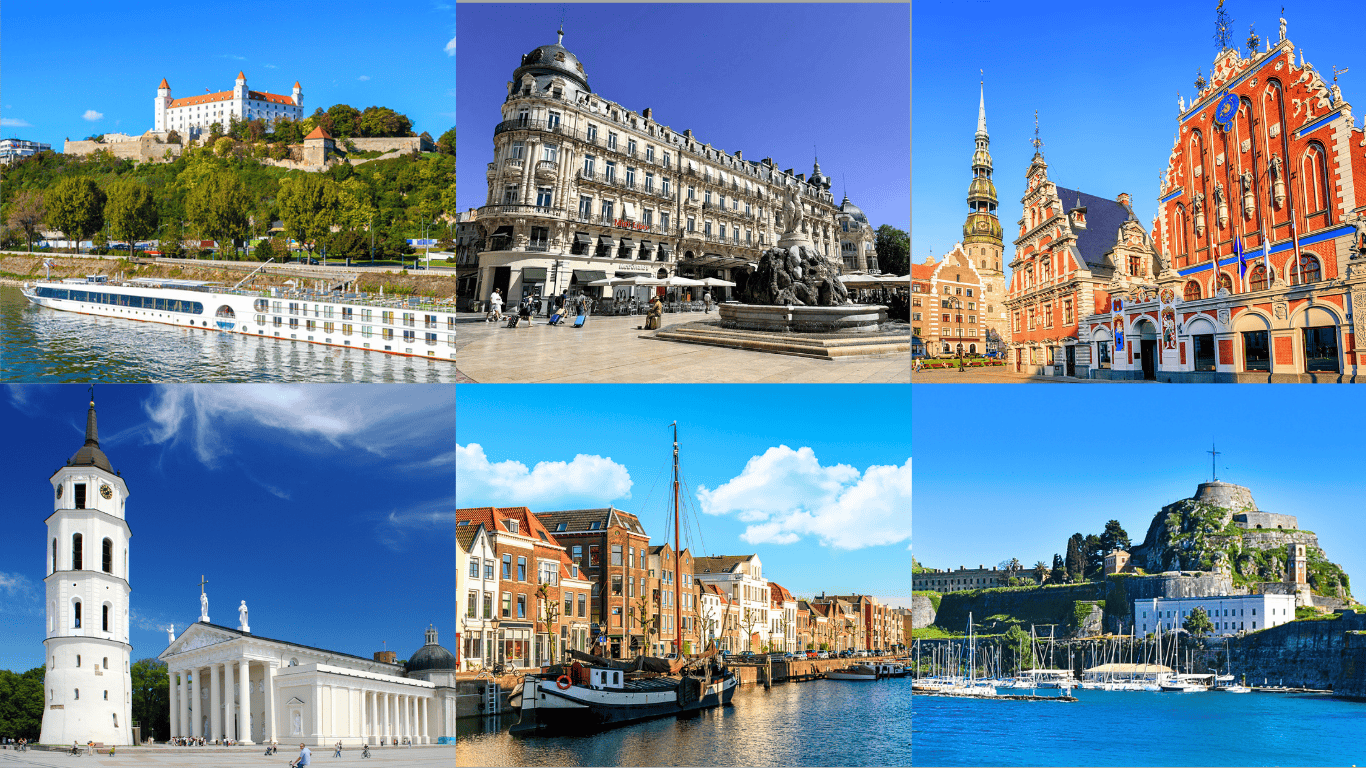
Here you’ll find a collection of often underrated cities in Europe that offer as much history, culture, and great experiences as the bigger cities. Read on to discover the top things to do in these 10 fabulous places.
This post contains affiliate links.
10 underrated cities in Europe to explore
Antwerp, Belgium

Belgium’s second city, Antwerp, has a great mix of old and new, and there are lots of things to do. It’s easy to get a feel for all of this on a short trip to the city.
The city has a medieval centre, and lots of the top attractions are around here. There is a pedestrianised Grote Markt (market square) dating back to the 1200s and many attractive guildhall buildings. The most noteworthy of these is the impressive 16th-century Stadhuis (Antwerp Town Hall).
In the adjacent Handschoenmarkt, there is the spectacular Cathedral of Our Lady (Onze-Lieve-Vrouwenkathedraal). This is one of the defining landmarks on the city’s skyline, thanks to its spire, which takes it to 123 metres high.
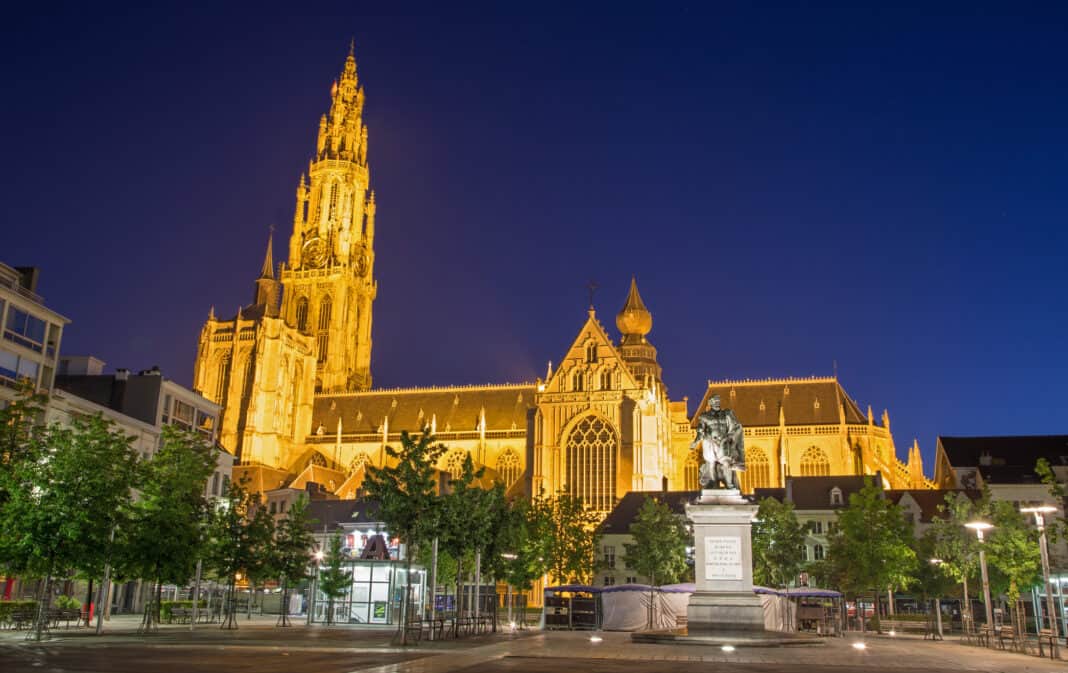
For a fee, you can go inside and view some paintings by Rubens. You can also try out the cathedral’s beer while on the site!
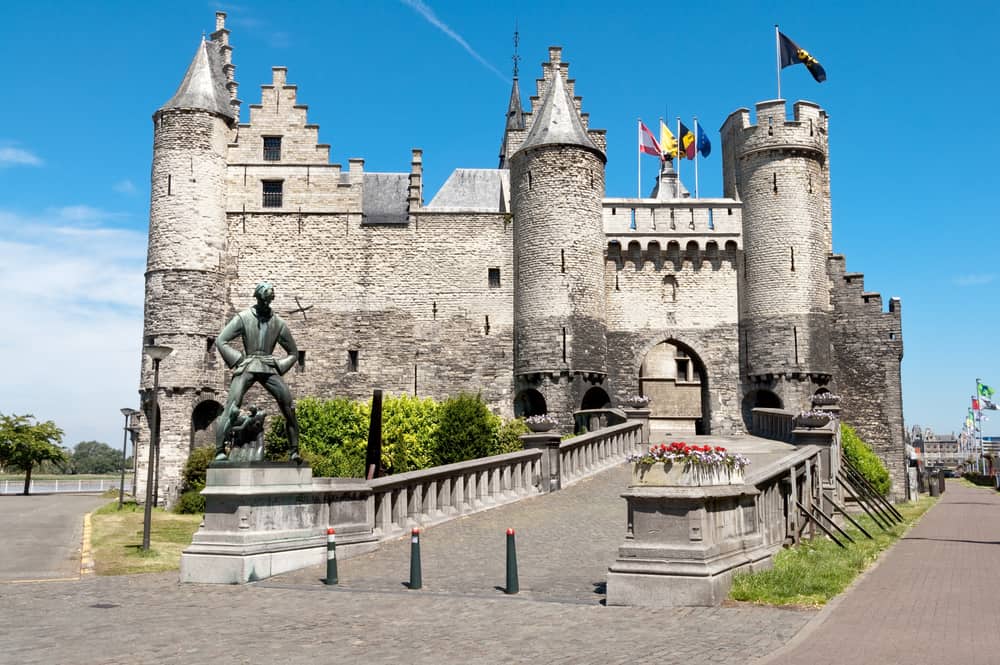
Antwerp also has a castle! Het Steen is the oldest preserved building in the city. It houses The Antwerp Story, an attraction that provides information on the city, its famous residents, and the museums that can be explored.
The city also has a zoo. This is located next to Antwerp Centraal Station, which is itself worth seeing. Dating from the early 1900s, the station is one of the most visually stunning railway station buildings I think you’ll ever see.
Antwerp museums
If you like visiting museums, you’ll also find that the city has an impressive array of first-class – and unique – museums. The Museum aan de Stroom is particularly unique: a 10-storey, almost cube-like structure, with an outside rooftop where you can enjoy spectacular views over the city. Inside is a diverse collection of artistic, cultural, and historical artefacts.
Nearby is the Red Star Museum, which focuses on the Red Star shipping line that once had Antwerp as its European port.
There’s also the Museum Plantin-Moretus, the original home and studio of the Plantin-Moretus publishing family and the site of the world’s oldest printing presses. There are also various places where you can view art, a Royal Palace, and an upmarket residential district where you can marvel at stately art nouveau houses.
For more information for the top things to do on an Antwerp city break, see my separate post on this.
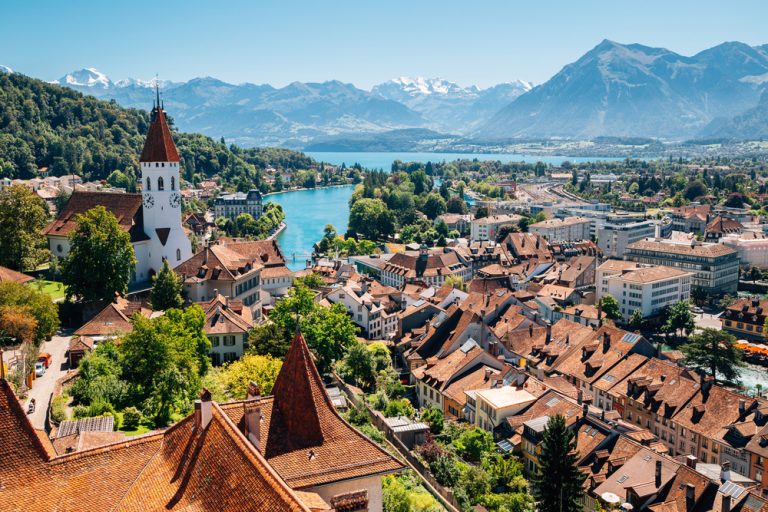
Lausanne, Switzerland
Lausanne, Switzerland’s fourth-largest city, is located on the northern shore of Lake Geneva in the French-speaking region of Switzerland. It is just 60 kilometres from Geneva and less than 25 kilometres from Montreux, themselves great places to visit.

It’s another of the underrated cities in Europe. Lots of people naturally flock to the larger cities in Switzerland, such as Geneva or Zurich, or to the smaller villages in the mountains.
But Lausanne is also a place worth spending some time in. It is split between a charming old town on the hill and the picturesque lakeside resort of Ouchy.
This mix means there’s lots of different things to do here. While you can explore the medieval architecture and landmarks in the old town, once you’re down on the lakeside, you can go for strolls along the water, take boat trips, and picnic in parks.
Lausanne old town
In the old town, there are several sights to see. These include the Notre Dame Cathedral, a beautiful Gothic building with ornate spires, intricate stonework, art, and sculptures. Nearby is the medieval castle, the Chateau St-Maire (you can’t go inside, but the views from here are worth seeing), and the Palais de Rumine, which houses five museums.
A popular place in the old town is the vibrant Place de la Palud. This square is surrounded by Neoclassical buildings, and you can stop off in the cafés and restaurants around here. Lausanne’s oldest fountain is in the centre.


Ouchy
When you’re in Ouchy, by the lakeside, the must-do attraction is a visit to the Olympic Museum.
The museum – which is set in a stunning location overlooking the lake – is a reminder that Lausanne is the home of the headquarters of the International Olympic Committee. You can wander around the grounds and see the exhibits and sculptures here, and also go inside to explore the three floors filled with fascinating displays, artefacts, footage, and interactive games.

Other things to do in Ouchy include hopping on a boat – either around the lake or over to France.
You can also stroll along the lakeside promenade, the Quais d’Ouchy. It stretches for a kilometre and there are places to stop off at and grab some refreshments or just take some photos of the lake.
At the far end is the Parc Du Denantou where you’ll find the Thai Royal Pavilion. This was a 2005 gift from the King of Thailand.

See my separate post for more top things to do in Lausanne and practical information to help you plan your visit.
Riga, Latvia
Riga, the capital of Latvia, is another ideal place for a city break. I’ve been twice and enjoyed myself both times.
It’s also a great place if you’re looking for a place where your money goes that bit further. Eating out is relatively cheap, and accommodation is reasonably priced.
And if you’re in the city for a while and visiting lots of different places, the Riga Pass can help as it offers a range of discounts for various sights, plus a free hop-on/hop-off bus tour.
Top sights in Riga
When you visit, you’ll discover a lovely UNESCO World Heritage Site old town. This has a charming warren of medieval streets, which are perfect for pottering around and admiring the fine buildings and architecture.

These include the 14th-century House of the Black Heads, the three unique buildings standing together called The Three Brothers, and St Peter’s Church with a 70-metre high observation deck from where you can look out over the city. There’s also Riga Cathedral and Dome Square, the largest square in Riga Old Town.
This part of the city also has a small, modest castle (the official residence of the country’s President) and the Powder Tower, which houses the Latvian War Museum. For eating out, there are bars and restaurants here serving local food.
There are more significant sights near the canal and Bastejkalna Park. There’s the Freedom Monument, a huge 43-metre high obelisk that honours the country’s independence. Nearby, there are several history museums and the Latvian National Opera House.
A fun way to see some of the sights is to hop on a boat. As you sail past the sights, you’ll see the distinctive buildings that comprise Riga Central Market. Once World War I Zeppelin hangars, the structures were converted to a market in 1930. It is a great place to visit if you want to pick up some tasty and cheap food.
There is a range of fascinating museums to visit in Riga, covering a variety of interests. If you have time, walk out to the The Corner House, the headquarters of the KGB in Riga. There’s an interesting museum here, and if you book in advance, you can see the cells.
If you’re walking from the old town to the Corner House, you’ll pass the spectacular and eye-catching Riga Nativity Cathedral, an orthodox cathedral at the side of a small grassy park.

And for day trips out of the city, head out towards the Baltic Sea coast. Jurmala is near Riga (a train journey of 20 to 50 minutes). It’s a place for relaxation: it has a long sweeping sandy beach, a forest park, a nature park, and a waterpark.
Rotterdam, The Netherlands
To first-time visitors, Rotterdam is architecturally like no other Dutch city. A large chunk of the centre was flattened in the early stages of World War II and needed to be rebuilt.
The result is a fascinating blend of impressive modern and cutting-edge architecture, with attractive waterfront townhouses that survived the devastation. All this makes for an interesting and fascinating Rotterdam city break.
Top sights in Rotterdam
On a visit to Rotterdam, you can get an idea of what the city looked like before the Nazi invasion in Delfshaven. This is a small and pretty area on the harbour, with bars, restaurants, and a windmill. There is also the De Pelgrim brewery, where you can sample local beer.
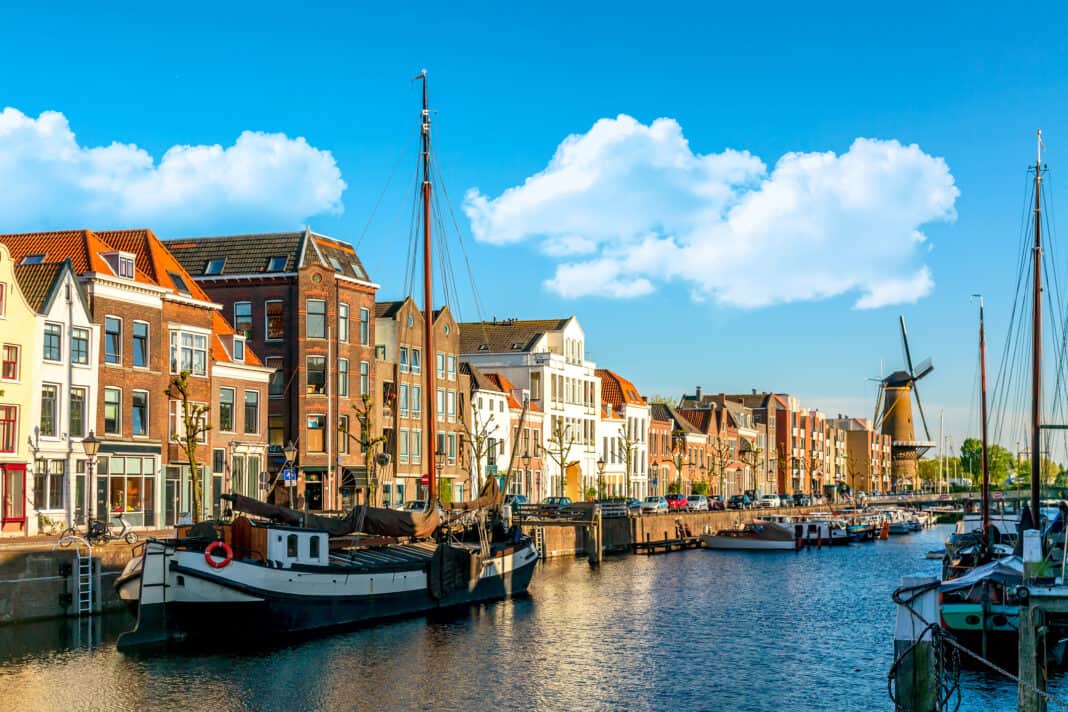
The Pilgrim Father’s Church is also in this area. It was the 17th-century meeting place of English pilgrims before they made their way to a new life across the Atlantic.
Another place to see some of the city’s old history is the St Laurenskerk church. This is the only medieval building left in the city. You can climb to the top to enjoy views of the city.
Unsurprisingly for Europe’s largest port, you can take a boat tour on the water.This gives you the chance to see the Erasmus Bridge, a modern structure called ‘the Swan’ by locals. The old harbour area also has several historic buildings, including the Witte Huis, a striking art nouveau building. It was apparently the tallest office building when it opened at the turn of the century.
If the city’s port history interests you, you can visit the Maritime Museum Rotterdam. Other museums include the Museum Bojimans van Beuningen and the Kunsthal Museum, both art museums. There’s also the Museum Rotterdam, which covers the history of the city.
Rotterdam’s modern architecture
After seeing some of the historical buildings and areas, you can move onto the more modern side of Rotterdam. Of note is the Overblaak Development. Here you can stare up at the famous yellow and white cube houses, which are luxury apartments.
A short walk away, you’ll find the Markthall (market hall). This is a massive horseshoe-shaped glass building, with a vast array of food stalls. You can time your visit with lunchtime and grab a snack here.

And if you’re looking for things to do in Rotterdam with children, the city has a zoo and Miniworld Rotterdam.
For more information on things to do in Rotterdam, check out my separate post.
Vilnius, Lithuania
Vilnius, the capital of Lithuania, offers a mix of history and culture that makes it ideal for a short break. The city’s compact size means you can easily cover its main attractions on foot and travel the short distance out to Trakai Castle, which sits on an island in a lake.
Top sights in Vilnius
Vinius is another of the underrated cities in Europe. In my experience, if people are planning a trip to the Baltic States, they often opt for a trip to Tallinn, which is a great place to visit. But Vilnius is just as great, albeit in a slightly less ‘chocolate-boxy’ way. I visited last year and loved it.
If you do plan to visit Vilnius, there are plenty of things to keep you occupied. As the central part of the city is small, I’d recommend you try to walk around most of it if you can. This way, you can walk from the Gates of Dawn, to the neo-classical Town Hall in the Town Hall Square, and then head to the nearby Presidential Palace.
From here, you can stroll along Pilies Street, the oldest street in Vilnius, and cross over into Cathedral Square. This is a wide-open square where you’ll find the elegant Vilnius Cathedral with its unique bell tower next to it.
The tower houses the city’s oldest clock, which you can climb for a small fee.

In this square, you can learn about Lithuania’s history in the Palace of the Grand Dukes of Lithuania, and then walk (or catch the tiny funicular for just a few euros) up to Gediminas Hill and look out over the city from here. Gediminas Tower sits on the top here and has a small museum inside.
You can also walk along Gediminas Avenue, see the beautiful historical buildings lining it, and then visit the Museum of Occupations and Freedom Fights in the former KGB building. The museum is only small, but is a stark reminder of the atrocities that were committed during the Soviet occupation of Lithuania. In the basement, you can see the cells where prisoners were held and tortured.
And then, if you have time during your city break in Vilnius, I’d recommend you take the short trip out to Trakai Castle. This is a medieval castle on an island in the middle of a lake. It’s located in a small historical town that was once the capital of Lithuania.

Glasgow, Scotland
As Scotland’s largest city, Glasgow has much to see and do in it. There are many landmarks, green open spaces, world-class museums, and a river to stroll along. The city is also well-located for other nearby places such as Edinburgh, Stirling, and the Loch Lomond and Trossachs National Park.
Glasgow is an easy city to navigate and is very walkable. It’s therefore straightforward to wander around the main sights. There are plenty of walking tours you can join, or you can jump on the hop-on hop-off bus.
Top sights in Glasgow
There are two pedestrianised streets in the centre to wander around: Sauchiehall Street, and the main thoroughfare, Buchanan Street. Along Sauchiehall Street you’ll come across the Mackintosh at the Willow Tea Room. You can tuck into delicious cakes and sandwiches while learning about one of the city’s most famous residents, the architect Charles Rennie Mackintosh.
The centre also boasts a prestigious public square, George Square. This is dominated by the colossal 19th-century City Chambers and features monuments and statues of notable Scotsmen, most significantly the national poet Robert Burns.
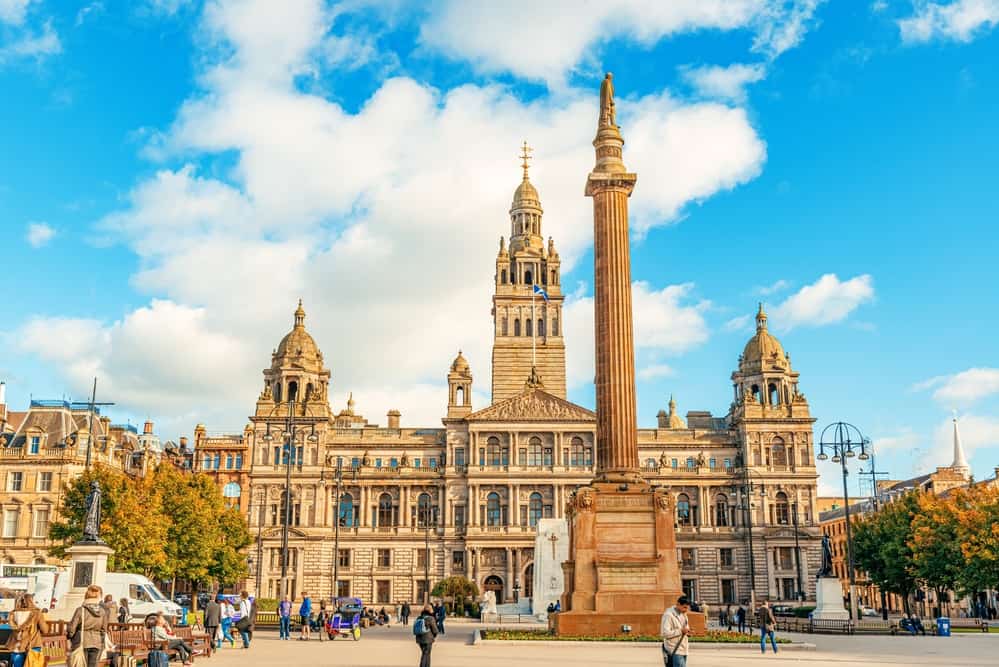
Nearby are other important landmarks, such as the Gallery of Modern Art, Hutcheson’s Hall, and the Tobacco Merchant’s House Exchange.
In the East End, you’ll find the Gothic masterpiece that is Glasgow Cathedral, “Scotland’s largest place of worship”. The city’s necropolis is just a short walk away. While the thought of exploring this vast Victorian cemetery may seem odd, once you’ve climbed to the top of the hill where it is situated, you’ll understand why it is worth going.
If you’re interested in visiting a museum, you won’t be disappointed. The city boasts several first-class art collections, including the Kelvingrove Art Gallery and Museum, the Gallery of Modern Art (aka GoMA).
There is also The Hunterian, a series of museums located at the University of Glasgow near to Kelvingrove Park, which is one of the largest green spaces in the city.

Aside from Kelvingrove Park, if you fancy getting some fresh air, you can visit Glasgow Botanic Gardens. The main feature is the Kibble Palace, a lovely 19th-century glasshouse that houses a variety of plants.
Or if you fancy a grittier experience, take a walk along the River Clyde. There are various sights around here such as the futuristic-looking SEC Armadillo events building, the Finnieston Crane, a striking landmark that has become a symbol of city’s industrial past, the superb Glasgow Science Centre, and the award-winning Riverside Museum.
Corfu Town, Greece
Corfu Town, the capital of the Greek island of Corfu, is another underrated city that is worth visiting. People often veer towards the capital, Athens, when looking for Greek city breaks (and for good reason, as my recent post demonstrates). Or they visit Corfu and head out to the more beachside destinations.
But Corfu Town is itself a great destination for a trip.
Top sights in Corfu Town
Corfu Town has a delightful UNESCO World Heritage old town, with architecture reflecting the island’s Venetian rule. When you explore, you can wander around the small streets and squares, see the beautiful bell tower of Saint Spiridon church, and grab a drink in the Liston, a trendy boulevard under arches.
Opposite the Liston is the Spianada, a wide grassy area that stretches along the side of the old town and leads up towards the sea. Here you will find the Palace of St Michael and St George (now containing the Museum of Asian Art). There is also a small park dedicated to the British authors Larry and Gerald Durrell, who famously lived on the island in the 1930s.
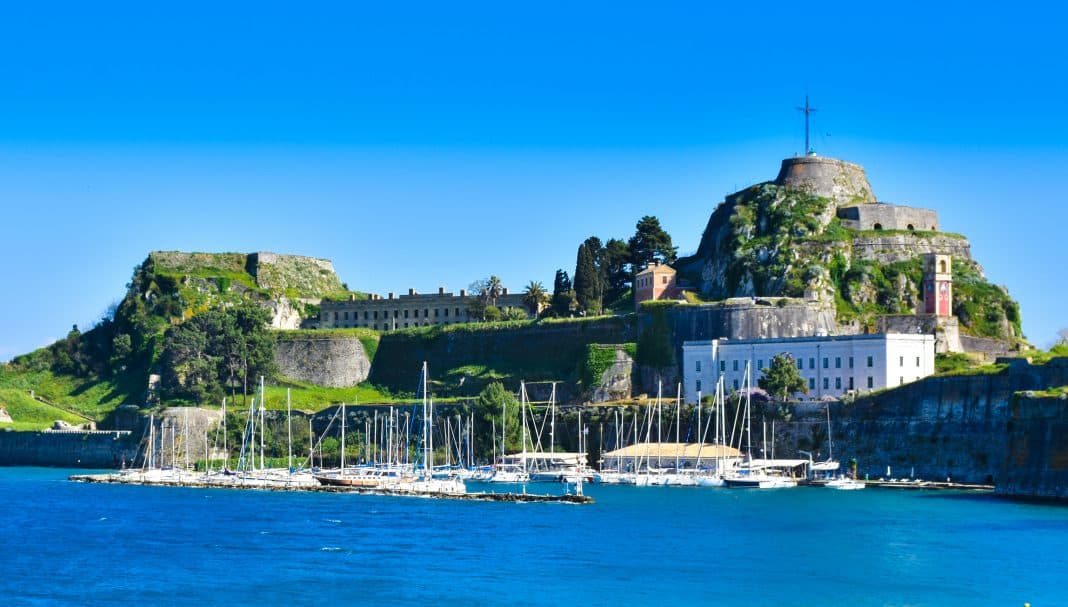
A short walk away is the Paleo Frourio (Old Fort), a Viennese fortress. Cross the walkway and explore the lower level before climbing to the lighthouse and ship mast at the top and looking out across the town and over the sea. Similarly, you can explore inside the New Fort and climb to the top for yet more views.
If you’re interested in visiting a museum, there are several to choose from. As well as the Corfu Museum of Asian Art housed in the Palace of Saint Michael and Saint George, there is the Banknote Museum of the Ionian Bank in a beautiful building in the old town and the Casa Parlanta Museum near the Liston.
To cool down in summer, you can take a dip in the sea. There are several lidos, including in the Faliraki Beach area, a short walk from the old town. If you swim here, you’ll have an amazing view of the old fort.
Beyond Corfu Town
For trips just outside the city centre, there is Kanoni. This has a tiny whitewashed monastery that sits at the end of short walkway in the sea. You can also visit Achilleion Palace. Tour the inside of the house and then wander around the garden where a statue of Achilles overlooks the sea.
For a longer day trip, you can go out to some of the seaside resorts on the island such as Gouvia and Paleokastritsa.
It’s also possible to catch a boat and sail over to the Albanian port of Sarande.
Bratislava, Slovakia
Bratislava, the capital of Slovakia and often referred to as one of Europe’s youngest capitals, is another top destination for a short break. It is located on the banks of the Danube River, just over 50 km from Vienna. This means you could, if you wanted to, combine a trip to both cities very easily, or take a day trip to Bratislava from the Austrian capital.
The city is relatively small, and most of the top attractions and historical sites are in and around its picturesque old town. This makes it a very walkable city.
Top sights in Bratislava
When you wander through the streets of the old town, you’ll see the city’s sole surviving medieval fortification, Michael’s Gate with Michael’s Tower. This dates from the 14th century and is the only gate from the old town’s fortifications that has survived. It is beautiful, especially when the street is lit up at night.

There are some traditional restaurants in this part of the city where you can try Slovakian cuisine in a local restaurant.
The main old town square (which is a focal point for Bratislava’s Christmas market) is the site of the Old Town Hall. This houses the Bratislava City Museum, where you can climb up the 45-metre high tower to view the city’s main sights. Nearby is another beautiful square with a striking pink-coloured classicist-style building, the Primate’s Palace. You can go inside and see the stunning Hall of Mirrors.
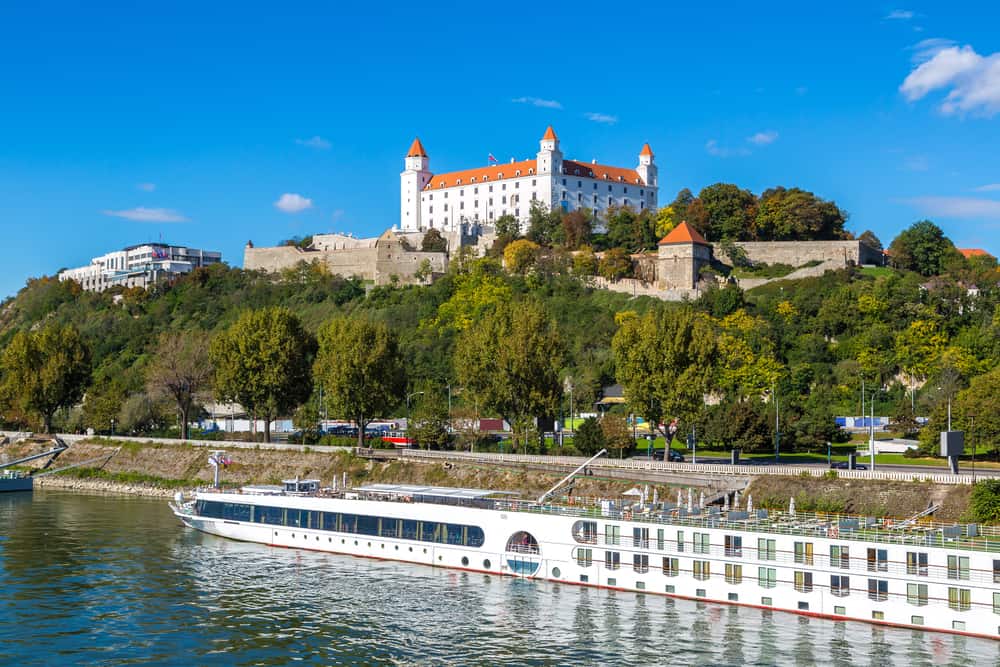
Bratislava also has a small red-roofed castle that sits on a hill overlooking the river (you can apparently see nearby Austria and Hungary). This landmark probably best symbolises Bratislava: it dominates the skyline and is captivating when it is lit up at night. Inside is the Slovak National Museum containing more than 250,000 artefacts reflecting Bratislava and Slovakia’s history.
If you fancy a walk slightly outside of the old town, visit the unique Art Nouveau Church of St. Elizabeth – or the ‘Blue Church’. Its blue façade is really unique, and it’s incredible to see up close.
Afterwards, you can explore the EUROVEA Waterfront complex and then head across the river to the UFO observation deck. The views from 95 metres high are wonderful – you can see right out over the river and beyond.
See my post on one day in Bratislava for more things to see and do here.
Montpellier, France
Nestled in the heart of the south of France, Montpellier is a captivating city and another popular tourist destination. I loved it when I visited. It has a plethora of attractions and historic landmarks, many of which are fairly close together, so you can easily walk between them.
My post on Montpellier outlines these, as well as an itinerary for a day out here.
You can start your visit in the grand Place de la Comédie. This large plaza is surrounded by beautiful buildings, including the 18th century Opera House. There’s a buzzy vibe here: it’s a busy place, with street performers, a fairground carousel, and café bars with outdoor seating.

From here, you can explore the old town, Le Vieux Montpellier, and its narrow medieval streets and small squares. As you explore, you’ll come across loads of little bars and restaurants to stop off in. The impressive neo-Gothic Saint Roch de Montpellier church is also in this area.
You can then walk up to the city’s 17th century Arc de Triomphe, the Porte du Peyrou, and go through it and into the Place Royale du Peyrou. This is one of the city’s main landmarks. It is a large open park framed by treelined walkways and a huge equestrian statue of Louis XIV in the centre. At the end, there is the 18th-century water tower (Chateau D’Eau).
The 16th-century Jardin des Plantes, France’s oldest botanical garden, is not far away. It’s a place to get out of the hustle and bustle of the city, with an English garden, an arboretum, a small ‘bamboo’ forest, an orangery, and a lake with fish. It’s a really calm and peaceful place, with lots of shady parts to escape the sun in summer.
Afterwards, you can cross the road and wander down to see the city’s Gothic Cathedral with its unique porch and pillars, before going back into the old town.
Other top things to do in Montpellier include viewing art in the Musée Fabre. This showcases artwork from the Renaissance up to the present time. You can also chill by the sea by heading out to the beach (the sea is just 11 kilometres away) and eat out in the Marche du Lez.
Beyond Montpellier
The city’s location also means it’s easy to take a day trip to other places, such as Avignon, with its magnificent Popes’ Palace, and Arles, with its ancient ruins and Roman Forum.

Odense, Denmark
The last place on my list of underrated cities in Europe is Odense in Denmark. It is a charming city, home to a delightful old town, historic houses, museums, and a beautiful park and river. Famous for being the birthplace of Hans Christian Andersen, the author of over 150 children’s fairy tales, there are also several landmarks where you can learn about his life and work.
And at just a little over an hour and a half from Denmark’s capital, Copenhagen, it’s worth a visit.
Top things to do in Odense
Odense is one of Denmark’s oldest cities with a charming old town with narrow streets, attractive squares and courtyards, and beautiful houses dating back to medieval times. And although Odense is Denmark’s third-largest city, it is relatively small, which makes it easy to explore on foot. Devote some time to wandering around when you visit.
Walking around, you’ll see the brightly coloured old buildings. There’s also an interesting selection of street art in various places, including in the square in Flakhaven near the Italian-style Odense City Hall.
Just south of this is the 14th-century St Canute’s Cathedral, the main cathedral. There is a park outside with a statue of Hans Christian Andersen.


For many people, the main draw to Odense is its connection to its famous son, the author Hans Christian Andersen. You can visit a museum dedicated to him and the two homes where he once lived.
The museum is a large complex and one of the best attractions in the city. Other museums in the city include The Danish Railway Museum dedicated to the history of rail transport in Denmark. For art lovers, there is the Brandts Art gallery, a museum of classical and contemporary art, photography, and film.
Aside from exploring the old town and visiting the museums, Odense has other areas to stroll around. The Munkemose Park is particularly lovely, with its parkland and river flowing through it. Eventyrhaven, near the city’s cathedral, has the ‘Fairy Tale Garden’ where you can cross over the bridge to an attractive garden and sit and look out over the water. There are other unique sculptures to see here, a pergola and a Chinese wall.
Odense also has a small castle (Odense Slot), an elegant white baroque building that started life as a monastery. The castle is in King’s Park, another of the green areas in the city.
To discover more things to do in Odense, see my separate post that outlines 12 best things to do when you visit.