Is Córdoba worth a day trip from Seville?
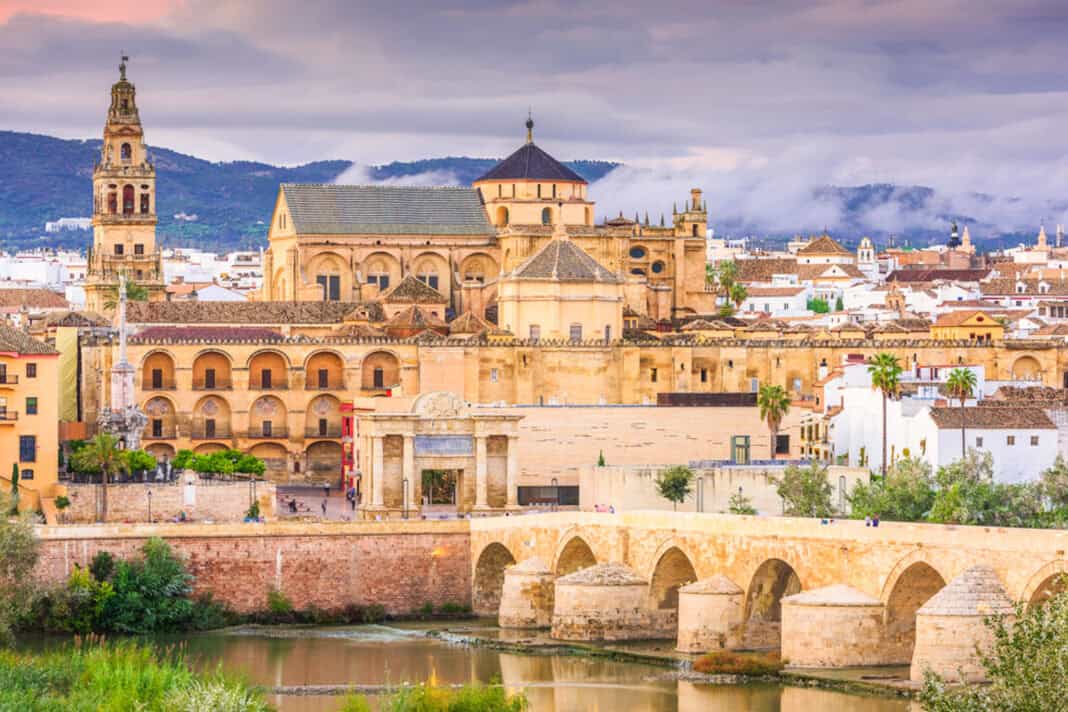
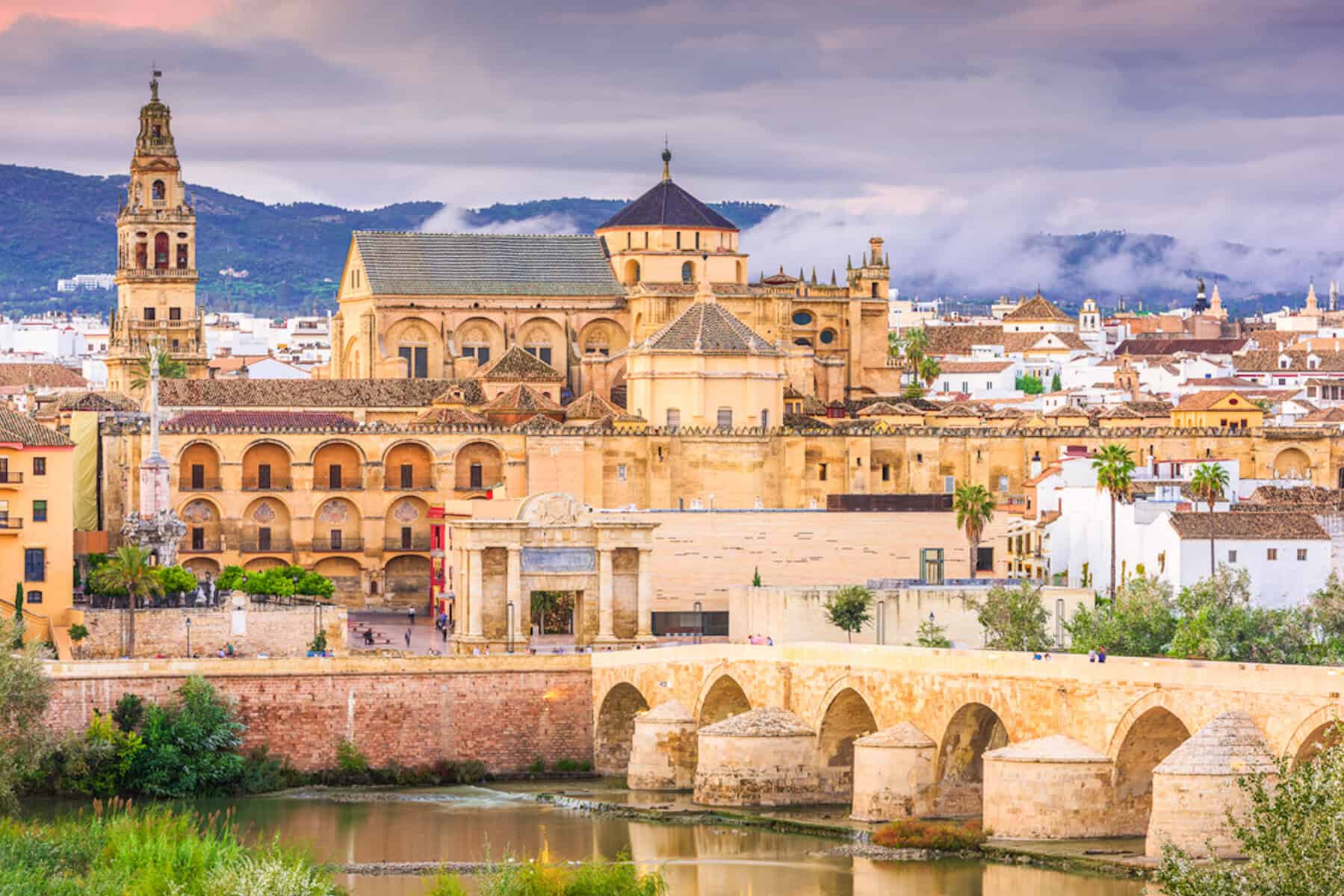
If you’re visiting Seville, you might be looking for day trips to other cities and towns where you can explore more of Andalucia’s charm, or even enjoy some fresh air on the coast. High up on the list of places to explore has to be Córdoba, a city around 120 kilometres northeast of Seville, famous for its Mosque-Cathedral and which has three UNESCO World Heritage Sites.
Located around 45 minutes away by train, Córdoba is one of the easiest and most popular day trips from Seville, making it ideal if you’re only visiting Andalucía for a short break.
But is Córdoba worth a day trip from Seville?
Yes, it definitely is! We recently spent one day in Córdoba as part of our Seville trip and loved it. It’s an easy and fascinating day out, and, in our opinion, is one not to be missed.
This post contains affiliate links
One day in Córdoba
Below you’ll find information on how to visit Cordoba on a day trip from Seville. It includes the top attractions in the city and the best things to put on your Cordoba itinerary if you only have one day.
At the end, you’ll also find a list of Frequently Asked Questions to help you plan your trip and decide if Cordoba is for you.
One day in Córdoba: top things to do
– Experience the incredible ‘Mosque-Cathedral’ (Mezquita-Catedral de Cordoba)
– Stroll around the old town & Jewish Quarter
– Visit Cordoba’s Alcázar de Los Reyes Cristianos
– Wander around the Alcazar’s beautiful gardens
– Walk across the city’s Roman Bridge & look back on the Mezquita & Alcazar
– Get views of the river from the Gate of the Bridge
– Snap a picture of one of Cordoba’s prettiest streets
– Try the city’s traditional pastry
Where is Cordoba?
Córdoba is located in southern Spain in the northern part of the Andalucia region, and lies along the banks of the Guadalquivir River.
It is around 120 kilometres from Seville, and 160 kilometres from Malaga, both cities to the south of Cordoba.
How long does the journey from Seville to Córdoba take?
Thanks to Spain’s excellent high-speed trains, it’s really easy to do a Cordoba day trip from Seville: the travel time to and from Cordoba is around 40 to 45 minutes.
If you have hired a car, you can also drive to Cordoba in around an hour and a half via the NIV motorway (find more information on the route here).
Top tip: If you plan to travel by train for your Cordoba day trip, book your train tickets in advance to avoid disappointment. We arrived at the train station to book a ticket for the next train, only to discover it was full and we would need to wait for the next one. Also, don’t forget to take your passport or identity card as you need to travel with it.
Organised tours to Cordoba
Alternatively you could opt to book an organised tour from Seville to Cordoba. This will provide transport to and from the city, plus a guided tour of the main highlights of the city.
This tour is a full day tour to Cordoba. After a coach/bus journey to Cordoba, there’s a guided tour of the Jewish Quarter, a guided tour of the Mosque-Cathedral, plus some free time to explore independently.
One day in Cordoba: the top things to do
For a relatively small city, there’s quite a lot to do in Cordoba.
But with just one day in Cordoba, you’ll have to decide what to prioritise, especially when you factor in the need to account for travel to and from the city. So, what can you realistically see in Córdoba in one day?
What can you see in one day in Cordoba?
Below is what we think you can realistically see in Cordoba on a day out, based on our recent trip.
Experience the incredible Mosque-Cathedral (Mezquita-Catedral)
Without doubt, the main sight to see on one day in Cordoba is the incredible ‘Mosque-Cathedral’ (Mezquita-Catedral de Cordoba).
Originally a mosque that was built on the grounds of a Christian church in the late 700s, it is one of the three designated UNESCO World Heritage sites in the city. If there’s only one thing you fit into your visit, this should be it.
With its large fortress-style walls dominating much of the old town, you can’t miss it when you’re strolling around.

Visiting the Mezquita-Catedral
You might have read about the magnificent splendour of the Mezquita-Catedral when planning your trip. But nothing quite prepares you for seeing it up close.
There’s no end to the stunning architecture woven together, with different, intricately designed sections. The blend of Islamic and Christian architecture placed side by side makes it one of the most unique buildings I’ve ever visited. The sheer scale of its cavernous interior will also blow you away.
Having visited recently, in my opinion, the best way to experience it is on a guided tour.
Why book a tour to the Mezquita-Catedral?
If you do book onto a tour, as we did, you’ll be richly rewarded.
The building has a long and tangled history, which is important in understanding how it has come to be designed as it is. A guide will fill you in on all of this. I’m sure we wouldn’t have fully appreciated its historical significance and the extensions and modifications that have taken place over the centuries without an experienced guide.
Your guide will be able to explain how this incredible landmark juxtaposes a former mosque and a Catholic cathedral seamlessly in a single building. This will include a chronology of how Spain’s Islamic invaders first converted a church into a mosque, an ambitious project that saw numerous enlargements over the centuries.
When the Christians reconquered Cordoba from the Muslims in the 1200s, they sensibly chose to leave the Mezquita intact rather than razing it to the ground.
Although little changed over the centuries that followed the Christian reconquest –aside from using the space as a cathedral for worship – over time, Spain’s Christian rulers made their own significant modifications to the structure. You’ll get to see these when you go inside.
Mezquita guided tours
Having the benefit of an experienced guide is therefore a real bonus in a place such as this. Although it does mean you must follow the guide’s timetable, once the tour is over, you’re free to stay as long as you like and can explore again at your own leisure.
Another advantage of booking a tour is that you can purchase skip-the-line tickets for the Mosque-Cathedral. Given how popular it is (there were crowds of people queuing to get in on the day we went), this is really handy, especially if you only have one day in Cordoba.
It will also help leave you enough time to visit other attractions in the city.
You can book a guided tour here.
The Patio de los Naranjos
If you visit the Mezquita-Catedral, you’ll start in the Patio de los Naranjos in front of the ticket booths.

The Patio is a wide, open courtyard to the side of the Mezquita, accessible through one of the gates in the wall. It was once a Muslim courtyard, but was later used by the Christians.
The 54-metre high bell tower you’ll see overlooking the courtyard was once the mosque’s minaret. It is currently the tallest structure in Cordoba.
As its name suggests, there are lots of orange trees in the courtyard dating back to the 15th century, along with palm and cypress trees. In the middle of the courtyard, there’s a large water feature.
Top tip: even if you don’t go into the Mezquita-Catedral, pop into the Patio de Los Naranjos to see some of the wonderful architecture from the outside – it’s free to go in.
Inside the Mezquita
Andalusia’s Muslim masters ruled Cordoba for several centuries. So, it’s hardly a surprise that as the city expanded and the population grew, the mosque was expanded quite a few times, both in a southward and eastward direction.
The first part you see when you step inside the Mezquita is the first prayer hall. It’s dark in here and takes a little while for your eyes to adjust.
But when they do, you’ll see scores of red and white striped arches supported by columns that appear to stretch into the distance beyond your line of vision. The different sections date from different periods in the mosque’s history and have slightly different designs, becoming progressively more ornate over time.

As you go further inside, you’ll see beautifully designed alcoves, doorways, and ceilings (some reminded me of parts of the Nasrid Palaces in Granada’s Alhambra). Make sure you look all around you: up, as well as to your sides, as there’s always something incredible to see.


The Mihrab
In our opinion, the most stunning section, design-wise, is the Mihrab.

This sports breathtaking designs, including lavish, finely decorated arches. These are even more impressive than the ones you saw when you first entered.
You can’t access the Mihrab itself, but you can stand behind a gate and admire its beauty from a distance.
There are shimmering gold mosaics with inscriptions from the Koran. There’s also a fabulous, marbled dome that allows natural light to filter into the interior.
The Cathedral
Towards the end of our tour, we went into the colossal Catholic cathedral, the Cathedral of Our Lady of the Assumption.
I knew there was a Catholic cathedral inside the building, but I never expected it be such a wow moment when we walked in.
Given the history of extending the Mezquita, you might expect it to have been designed as another extension. However, the King at the time agreed that it should instead be built inside the current structure, and thus space was made in the centre for it.
When you see it, you’ll understand why it took a long time to complete. There’s so much in there: stunning ceilings, an ornate altar and choir section, statues and religious artwork: a real mishmash of baroque, gothic, and renaissance designs.


The finished work is utterly incredible and provides a unique contrast to the Islamic sections wrapped around it.
Stroll around the old town and the Jewish Quarter
Cordoba’s old town and historic centre is a delight (and another UNESCO site).
Much of it is centred around the Jewish Quarter (La Juderia), the area on the north side of the river surrounding the Mosque-Cathedral. It’s full of narrow, cobbled, streets lined with souvenir shops, boutiques, restaurants, and cafes. There’s no end of flowerpots with colourful flowers hanging off the side of buildings, prompting you to stop numerous times to take photos.


There are also small courtyards and squares that you’ll come across as you wander.

The further away from the Jewish area you go, the more the streets widen out. The city’s main square, Plaza de las Tendillas, is about a 10-to-15 minute walk away in the commercial centre of the city. It is a large open square with an equestrian statue in the middle.
It’s true that the Jewish Quarter in particular is a little touristy, but it’s a lovely, vibrant area, nonetheless. Definitely spend some time exploring its warren of narrow lanes.
Snap a picture of one of Cordoba’s prettiest streets
One of the most well-known streets to walk through when you’re in the Jewish quarter in Cordoba is the Calleja de las Flores (the Alley of the Flowers). This is not far from the Mezquita, so it would be very easy to pop over and see it on your day out.
It’s a very narrow street lined with whitewashed buildings and colourful blue pots of flowers hanging from the walls. At one end, you can see the bell tower of the Mezquita peeking out.
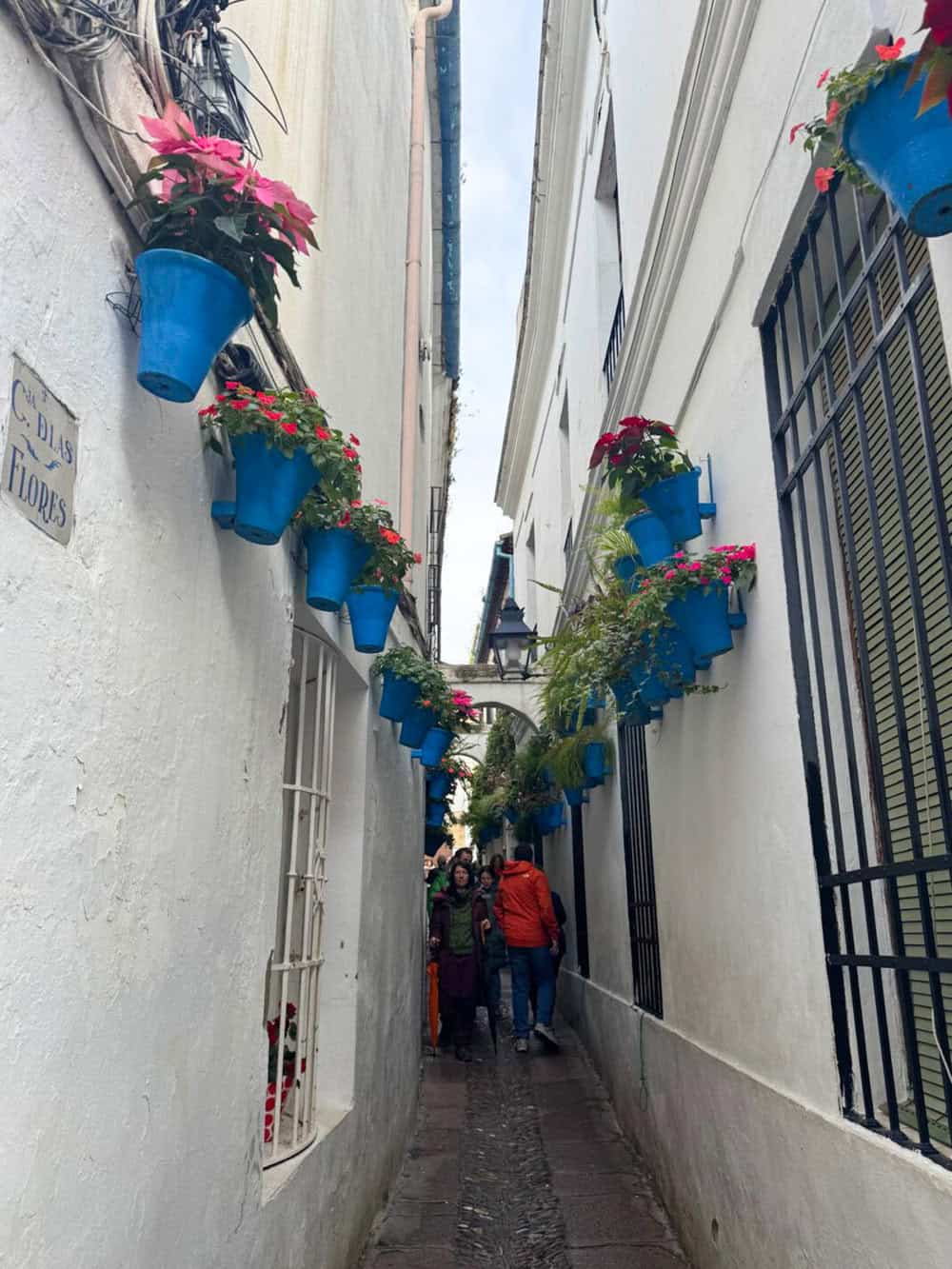

It’s a real tourist attraction, so expect to see lots of people here. If you want to snap a picture of the street without people in it, you have to be patient!
Try the city’s traditional pastry
If you do wander down the Calleja de las Flores and fancy a quick pitstop, there’s a small café on one side that we’d recommend.
The Casa Cayetano is a perfect place for this. It has seating inside the front café and more in the back in a charming Moorish-style room. It serves the Pastel Cordobes, a traditional dessert made with flaky pastry with jam between the layers.

You’ll see this in the window as you pass by, and there are lots of different flavoured fillings to choose from (we had a slice of the pistachio one and one with an orange jam in it).
Obviously, if you’re not a fan of pastry, this won’t appeal to you. But we thoroughly enjoyed it, and it was just the right size to see us through to our tour of the Mezquita in the afternoon.
Walk across the Roman Bridge
Just across the road from the old town in Cordoba is the old Roman Bridge (Puente Romano). Although this dates back to the 1st century, most of the main section was constructed during the Middle Ages.
The stone bridge straddles the Guadalquivir River and has 16 arches. From the old town side, you can see the Calahorra Tower (Torre de la Calahorra). Once an ancient fortress, it’s now a small museum.
And if you walk to the tower and look back over the length of the bridge from that direction – which I’d really recommend – you get wonderful views back to the Mezquita and the Alcazar.

Top tip: We weren’t on the bridge at sunset, but I’ve read that the view is particularly special at that time of the day. So, if you’re able to stay a bit later on your day out, the best time to visit might be as the sun sets.
Get views of the river from the Puerta del Puente
As you walk around the main centre of Cordoba, or if you’re planning to cross the Roman Bridge, you can’t miss the Puerta del Puente (The Gate of the Bridge). This huge gate sits at one of the entrances to the old town by the Plaza del Triunfo. It once formed part of the old city walls.
It’s a grand structure, with a square gate flanked by two columns. For a small fee, you can go inside to see a small history exhibition. You can then go up to the top and look out over the river.

Visit Cordoba’s Alcazar
Cordoba’s Alcázar de Los Reyes Cristianos (Castle of the Christian Monarchs) is a short walk from the old town, along the road from the Roman Bridge. You’ll probably spot people walking that way, so will know which direction to go in!
Throughout its history, the Alcazar has served as a defensive fortress, a palace for the Christian Monarchs, a prison, and the headquarters for the Inquisition.
Unfortunately, when we visited, the Alcazar was currently closed while undergoing renovation work, so we were unable to pop inside. However, if you are lucky enough to be able to gain entry, you’ll get to see features that include the fortress towers, the Hall of Mosaics, the Chapel of Inquisition, Arabic-style baths, and courtyards.
Top tip: even if you’re not able to go inside the Alcazar, stroll through the gardens, which are open every day except Mondays, and are free to enter.
Stroll around the Alcazar’s beautiful gardens
Even if the timing of your visit means you can’t go into the Alcazar, you can still visit its beautiful gardens. It’s free to go in and is definitely worth some of your time in Cordoba.

There are several sections built on three tiers – a higher, middle, and lower garden – and designed around large ponds. This design apparently enables water from the mountains to be channelled down to the lowest level from the higher tiers.
The lower part, which you’ll come into from the entrance gates, is a large open area. There’s a striking water channel with small fountains spurting up in it. This is lined with tall trees and is really striking. It reminded me a bit of parts of the Generalife garden in the Alhambra in Granada.

You will also find other large ponds and long, neat, tree-lined pathways, including the Paseo de Los Reyes (the Promenade of Kings). Nearer the Palace, and up a level, there are smaller ponds with walkways around them. This is a good level from which to take photos of the garden below.

The section to the side, and nearer the Palace, comprises a series of smaller gardens. These are more shaded and are dotted with statues and small fountains. Two of the statues are of Catholic Monarchs who are said to have met with Christopher Columbus to discuss his future expeditions.
Top tip: If you want to visit the Alcazar’s gardens, avoid visiting on a Monday, when they are closed.
One day in Cordoba: Frequently Asked Questions
Yes, Cordoba is definitely worth visiting. We visited as a day trip from Seville and loved it. So much so that we’ll definitely go back when we next visit Andalucía.
The city has a lot to recommend it: a charming UNESCO-listed old town which is easily walkable, beautiful side streets, a Royal Palace and, most significantly, the famous Mezquita-Catedral.
The blend of Islamic and Christian architecture placed side by side in the Mezquita makes it one of the most unique buildings I’ve ever visited.
With just one day in Cordoba, the must-see attractions are:
– The Mezquita-Catedral (Mosque-Cathedral) – this is undoubtedly the main reason to visit and the place you should prioritise if you only have time for one attraction
– The old town and the Jewish Quarter
– The Alcázar de los Reyes Cristianos
– The Roman Bridge
Cordoba is quite a small place as cities go, so yes, you can see the main sights in a single day. If you do only have one day in Cordoba, I’d advise you to focus on the Mezquita-Catedral and the area immediately around it.
Even if you’re short on time and only get to visit the famous Mezquita, you will have seen the city’s most significant landmark, and will appreciate why the city is so historically important within the region.
Yes, yes and yes! If you only visit one place in Cordoba, it should be the Mezquita. With an Islamic mosque sitting side-by-side with a Catholic Cathedral, it’s one of the most unique places I’ve visited.
It has a massive footprint, so there’s plenty to see inside. You could literally spend hours strolling around, taking in all the fascinating sections and beautiful architecture.
Yes, absolutely!
There’s no obligation to book a guided tour. You can buy entrance tickets here that allow you to explore at your own leisure with an audio guide.
A guided tour will help, however, as you can skip the line. Also, the tour will include a guide who will provide information about the Mezquita and answer any questions you have.
It’s not for everyone, though. If you prefer to explore independently, I’d advise you to do a quick online search to read up before you visit, so you can fully appreciate the Mezquita’s wonders.
Yes, it’s strongly recommended to book in advance for the Mezquita. Tickets can sell out, or you may have to queue for ages.
The train station is about a 25-minute walk from the historic centre. You can walk onto the Avenida de America and then turn and walk along the Avenida de Cervantes, along the side of the Jardines de la Agricultura and down to the Paseo de la Victoria.
You can then turn off and walk towards the Commercial Centre and the Jewish Quarter.
If time is short, however, I’d recommend catching a taxi into the centre. We did this and got dropped off right by the Roman Bridge. The journey only took a few minutes, and the fare was reasonable.
Yes, Cordoba is very walkable.
Most of the city’s highlights – especially those you’re most likely to be focusing on with just one day in Cordoba – are within the historic centre, so you’ll only have a short walk between them. Although we got a taxi from the train station (more to maximise our time on our day out), once we arrived in the city centre, we walked everywhere.
We’d advise wearing comfortable shoes. The old town has some cobbled streets, it’s dark in places in the Mezquita, and there are quite a few raised levels with steps in the Alcazar’s gardens.
One day in Cordoba
If you’re visiting Cordoba or are in Andalucia, then you might also be interested in my post on the top things to do in Jerez de la Frontera. This is another great day trip from Seville.
I also have an itinerary for one day in Malaga, which is just over an hour from Cordoba in southern Spain, as well as one that sets out top tips for visiting Granada’s Alhambra Palace.